Verbete enciclopédico
Franz Liszt
1811 – 1886
Transcreveu para o piano as nove sinfonias de Beethoven. Em seus poemas sinfônicos, explorou como a orquestra podia interpretar temas literários.
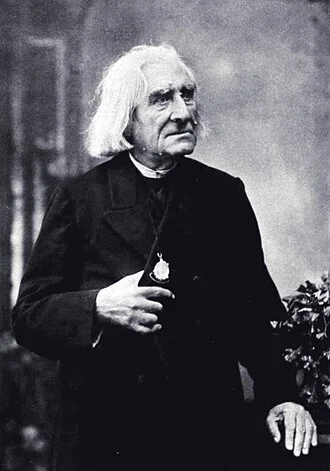

- Áreas
- Música
- Períodos
- Século XIX
Contexto histórico
O virtuose itinerante tornou-se uma figura pública na Europa do século XIX. Transcrições para piano levavam óperas e sinfonias a ouvintes sem acesso a uma orquestra. Mais tarde, os meios de uma corte em Weimar permitiram experimentar a relação entre literatura e forma orquestral.
Regiões de atuação histórica · Hungria, Alemanha
Biografia
Franz Liszt nasceu de Anna Liszt (nascida Maria Anna Lager) e Adam Liszt em 22 de outubro de 1811, na vila de Doborján (hoje Raiding, Áustria) no Condado de Sopron, Reino da Hungria, que fazia parte da Monarquia de Habsburgo. O pai de Liszt era administrador de terras a serviço do Príncipe Nicolau II Esterházy; músico amador entusiasta, tocava piano, violão e flauta, e conhecia pessoalmente Joseph Haydn e Johann Nepomuk Hummel. Criança prodígio renomada, Franz começou a improvisar ao piano antes dos cinco anos, e seu pai incentivou diligentemente seu progresso. Franz também teve contato com música ao frequentar a missa, bem como por meio de bandas romani que percorriam o interior húngaro. Seu primeiro concerto público foi em Sopron em 1820, aos nove anos; seu sucesso levou a outras apresentações em Pressburg e para a corte do Príncipe Nicolau em Eisenstadt.
O tempo de Liszt em Budapeste foi resultado dos esforços do governo húngaro para atraí-lo para trabalhar lá. O plano de fundação da Academia Real de Música foi acordado pelo Parlamento Húngaro em 1873, e em março de 1875 Liszt foi nomeado seu presidente. A academia foi oficialmente aberta em 14 de novembro de 1875, com o colega de Liszt, Ferenc Erkel, como diretor, e Kornél Ábrányi e Robert Volkmann no corpo docente. O próprio Liszt só chegou para dar aulas em março de 1876. A partir de 1881, quando estava em Budapeste, ele ficava em um apartamento na Academia, onde ensinava alunos de maneira muito semelhante à que fazia em Weimar. Em 1925, a instituição foi renomeada em homenagem a Liszt.
Trechos de Franz Liszt, de colaboradores da Wikipédia em português. Seleção sob CC BY-SA 4.0.
- Nascimento
- 1811
- Falecimento
- 1886
- Precisão das datas
- ano
- Última atualização editorial
- 27/11/2026
Genealogia do conhecimento
Antecessores e influências intelectuais
O acervo ainda não documenta vínculos nesta categoria.
Contemporâneos e interlocutores
Richard Wagner · Liszt apoiou a circulação da música de Wagner e dirigiu a estreia de Lohengrin em Weimar. A relação documenta uma colaboração de interpretação e divulgação, além da proximidade pessoal.
Frédéric Chopin · Chopin e Liszt conviveram na vida pianística parisiense; Liszt também escreveu um livro sobre Chopin. A recepção combina convivência pessoal e elaboração póstuma da imagem de um compositor.
Sucessores e desdobramentos intelectuais
O acervo ainda não documenta vínculos nesta categoria.
Genealogia intelectual interativa
Vínculo e documentação
Liszt apoiou a circulação da música de Wagner e dirigiu a estreia de Lohengrin em Weimar. A relação documenta uma colaboração de interpretação e divulgação, além da proximidade pessoal.
Richard Wagner — verbete e referências da revisão consultada
Vínculo e documentação
Chopin e Liszt conviveram na vida pianística parisiense; Liszt também escreveu um livro sobre Chopin. A recepção combina convivência pessoal e elaboração póstuma da imagem de um compositor.
Frédéric Chopin - Opéra national de Paris
About Franz Liszt | Liszt Ferenc Memorial Museum and Research Centre
Franz Liszt — verbete e referências da revisão consultada
Frédéric Chopin — verbete e referências da revisão consultada
Pensamento e principais ideias
A orquestra em dez dedos
Ao transcrever Beethoven, Liszt precisou sugerir no teclado diferenças de registro, articulação e densidade que a orquestra distribui entre várias famílias instrumentais.
Compare a abertura da Quinta Sinfonia com a transcrição para piano. Que recurso preserva a força do motivo quando o timbre muda?
Estilo de performance
O estilo de performance de Liszt mudou ao longo de sua vida, tanto em suas decisões interpretativas quanto em sua fisicalidade (o jovem Liszt era extremamente animado ao teclado, mas na velhice era muito quieto). Não existem gravações conhecidas de Liszt, então, para ter uma impressão de seu estilo, os estudiosos precisam recorrer a escritos contemporâneos e à produção de seus alunos, permitindo certa mitologização em torno de seu talento extraordinário.
Música programática
A principal contribuição de Liszt para a música programática foram seus treze poemas sinfônicos, obras orquestrais de um movimento nas quais algum programa ou ideia extramusical fornece um elemento narrativo ou ilustrativo. Os primeiros doze foram escritos entre 1848 e 1858, e os mais conhecidos são Les préludes e Mazeppa. Os poemas sinfônicos foram mal recebidos pela crítica, especialmente em Weimar, onde Liszt residia na época—criticaram o estilo composicional de Liszt, bem como toda a ideia da música programática como o futuro da música.
Trechos de Franz Liszt, de colaboradores da Wikipédia em português. Seleção sob CC BY-SA 4.0.
Bibliografia
Estado do levantamento bibliográfico: parcial.
Catálogo de obras
Ver registros (1.869)
- Don Sanche (Le château de l'amour) · S 1
- Die Legende von der Heiligen Elisabeth · S 2
- Christus · S 3
- Cantico di San Francesco · S 4/1
- Cantico del sol di Francesco d'Assisi · S 4/2
- Sainte Cécile (Die heilige Cäcilia)(Legende) · S 5/2
- Sainte Cécile (Die heilige Cäcilia)(Legende) · S 5/2a
- Die Glocken des Strassburger Münsters · S 6
- Cantantibus organis (Antiphona in festo Santa Caeciliae) · S 7
- Cantantibus organis (Antiphona in festo Santa Caeciliae) · S 7bis
- Missa quattuor vocum ad aequales · S 8/1
- Missa quattuor vocum ad aequales (Szekszárd Mass) · S 8/2
- Missa Solennis (Graner Mass) · S 9
- Missa Choral, sacredis · S 10
- Ungarische Krönungsmesse (Hungarian Coronation Mass) · S 11
- Requiem (Messe des morts) · S 12
- Psalm 13 (Herr, wie lange willst du meiner so gar vergessen) · S 13/1
- Psalm 13 (Herr, wie lange willst du meiner so gar vergessen) · S 13/2
- Psalm 13 (Herr, wie lange willst du meiner so gar vergessen) · S 13/2a
- Psalm 18 (Coeli enarrant gloriam Dei / Die Himmel erzählen die Ehre Gottes) · S 14/1
- Psalm 18 (Coeli enarrant gloriam Dei / Die Himmel erzählen die Ehre Gottes) · S 14/1a
- Psalm 18 (Coeli enarrant gloriam Dei / Die Himmel erzählen die Ehre Gottes) · S 14/2
- Psalm 18 (Coeli enarrant gloriam Dei / Die Himmel erzählen die Ehre Gottes) · S 14/2a
- Psalm 23 (Mein Gott, der ist mein Hirt) · S 15/1a
- Psalm 23 (Mein Gott, der ist mein Hirt) · S 15/1b
- Psalm 23 (Mein Gott, der ist mein Hirt) · S 15/2a
- Psalm 23 (Mein Gott, der ist mein Hirt) · S 15/2b
- Psalm 116 (Laudate Dominum) · S 15a/1
- Psalm 116 (Laudate Dominum) · S 15a/2
- Psalm 129 (De profundis) · S 16/1
- Psalm 129 (De profundis) · S 16/2
- Psalm 137 (An den Wassern zu Babylon) · S 17/1
- Psalm 137 (An den Wassern zu Babylon) · S 17/2
- Choruses with French texts (5): · S 18
- Qui m'a donné la naissance · S 18/1
- L'Eternel est son nom · S 18/2
- Chantons, chantons l'auteur de la lumière · S 18/3
- (Allegretto, moderato con grazia) · S 18/4
- Combien j'ai douce souvenance · S 18/5
- Hymne de l'enfant á son réveil (O père qu'adore mon père) · S 19/2
- Hymne de l'enfant á son réveil (O père qu'adore mon père) · S 19/3
- Hymne de l'enfant à son réveil (O père qu'adore mon père) · S 19/4
- Ave Maria I · S 20/1
- Ave Maria I · S 20/2
- Pater noster I · S 21/1
- Pater noster I · S 21/2
- Pater noster IV · S 22
- Domine salvum fac regem (Psalm 20) · S 23
- Te Deum I · S 24
- Die Seligkeiten (Les béatitudes) · S 25
- Festgesang zur Eröffnung der zehnten allgemeinen deutschen Lehrerversammlung (Wir bau'n und bestellen das edelste Feld) · S 26
- Te Deum II · S 27
- An den heiligen Franziskus von Paula (Gebet) · S 28
- Pater noster II (Das Vater unser) · S 29
- Responsorien und Antiphonen (Répons et Antiennes) · S 30
- Christus ist geboren I (Weihnachtslied I) · S 31/1
- Christus ist geboren I (Weihnachtslied I) · S 31/2
- Christus ist geboren II (Weihnachtslied II) · S 32/1
- Christus ist geboren II (Weihnachtslied II) · S 32/2
- Christus ist geboren II (Weihnachtslied II) · S 32/3
- Slavimo slavno, Slaveni! · S 33
- Ave maris stella · S 34/1
- Ave maris stella · S 34/2
- Crux! (Hymne des marins avec Antienne approbative de Notre Tout Saint Père Pie IX) · S 35/1
- Crux! (Hymne des marins avec Antienne approbative de Notre Tout Saint Père Pie IX) · S 35/2
- Dall' alma Roma · S 36
- Mihi autem adhaerere (Offertoire de la messe du patriarche séraphique San François) · S 37
- Ave Maria II · S 38
- Inno a Maria Vergine · S 39/1
- Inno a Maria Vergine · S 39/2
- O salutaris hostia I · S 40
- Pater noster III · S 41/1
- Pater noster III · S 41/2
- Tantum ergo · S 42/1
- Tantum ergo · S 42/2
- O salutaris hostia II · S 43
- Ave verum corpus · S 44
- Libera me · S 45
- Anima Christi sanctifica me · S 46/1
- Anima Christi sanctifica me · S 46/2
- Sankt Christoph (Legend) · S 47
- Der Herr bewahret die Seelen seiner Heiligen · S 48
- O heilige Nacht (Weihnachtslied) · S 49
- Adeste fidelis · S 49a
- Es segne uns Gott · S 50/1
- Meine Seel' erhebt den Herrn (Gott sei gnädig und barmherzig) · S 50/2
- Nun ruhen alle Wälder · S 50/3
- O Haupt voll Blut und Wunden · S 50/4
- O Lamm Gottes! · S 50/5
- Was Gott tut, das ist wohlgetan · S 50/6
- Wer nur den lieben Gott läßt walten · S 50/7
- Vexilla Regis · S 50/8
- Crux ave benedicta · S 50/9
- O Traurigkeit · S 50/10
- Nun danket alle Gott! · S 50/11
- Jesu Christe (Die fünf Wunden) · S 50/12
- Meine Seel' erhebt den Herrn! (Gott sei uns gnädig und barmherzig) (Der Kirchensegen) · S 51
- Septem sacramenta · S 52
- Via crucis (Les 14 stations de la croix) · S 53
- Ossa arida · S 55
- Rosario · S 56
- Mysteria gaudiosa · S 56/1
- Mysteria dolorosa · S 56/2
- Mysteria gloriosa · S 56/3
- Pater noster · S 56/4
- In domum Domini ibimus · S 57
- O sacrum convivium · S 58
- Pro Papa · S 59
- Tu es Petrus · S 59/1
- Dominus conservet eum · S 59/2
- Ave Maria III (Sposalizio) · S 60
- Nun danket alle Gott · S 61
- Mariengarten · S 62
- Qui seminant in lacrimis (Psalm 125) · S 63
- Pax vobiscum! · S 64
- Qui Mariam absolvisti · S 65
- Salve Regina · S 66
- Festkantate zur Enthüllung des Beethoven-Denkmals in Bonn (Was versammelt hier die Menge)(Beethoven Cantata No.1) · S 67
- Zur Säcularfeier Beethovens(Beethoven Cantata No.2) · S 68
- Chöre zu Herders Entfesseltem Prometheus · S 69i
- Chöre zu Herders Entfesseltem Prometheus · S 69ii
- Chöre zu Herders Entfesseltem Prometheus · S 69iii
- An die Künstler · S 70i
- An die Künstler · S 70ii
- An die Künstler · S 70iii
- An die Künstler · S 70iv
- Gaudeamus igitur (Humoreske) · S 71
- Gaudeamus igitur (Humoreske) · S 71bis
- Vierstimmige Männergesänge (4): · S 72
- Rheinweinlied (Wo solch ein Feuer) · S 72/1
- Rheinweinlied (Wo solch ein Feuer) · S 72/1a
- Studentenlied aus Goethe's Faust (Es lebt' eine Ratt im Kellernest) · S 72/2
- Reiterlied I (Die bange Nacht ist nun herum) · S 72/3
- Reiterlied II (Die bange Nacht ist nun herum) · S 72/4
- Es war einmal ein König (Flohlied) · S 73
- Das deutsche Vaterland I (Was ist das deutsche Vaterland?) · S 74/1
- Das deutsche Vaterland II (Was ist das deutsche Vaterland?) · S 74/2
- Über allen Gipfeln ist Ruh' (Wanderers Nachtlied) · S 75/1
- Über allen Gipfeln ist Ruh' (Wanderers Nachtlied) · S 75/2
- Über allen Gipfeln ist Ruh' (Wanderers Nachtlied) · S 75/3
- Das düstre Meer umrauscht mich · S 76
- Heil! Unsrer Glocke heil · S 76a
- Die lustige Legion · S 77
- Trinkspruch (Giesst Wein in die Gläser, ihr Zecher!) · S 78
- Titan (Auf des Athos blauen Felsenspitzen) · S 79/1
- Titan (Auf des Athos blauen Felsenspitzen) · S 79/2
- Les quatre élémens · S 80
- La terre · S 80/1
- Les aquilons · S 80/2
- Les flots · S 80/3
- Les astres · S 80/4
- La terre · S 80bis/1
- Les aquilons · S 80bis/2
- Les flots · S 80bis/3
- Les astres · S 80bis/4
- Le forgeron (Le fer est dur, frappons, frappons) · S 81/1
- Le forgeron (Le fer est dur, frappons, frappons) · S 81/2
- A patakhoz (A patakcsa) · S 81a
- Arbeiterchor (Herbei, herbei, den Spath' und Schaufel ziert) · S 82
- Ungaria-Kantate (Aus Osten aus der Sonne Tor) · S 83a
- Ungaria-Kantate (Aus Osten aus der Sonne Tor) · S 83b
- Licht, mehr Licht · S 84/1
- Licht, mehr Licht · S 84/2
- Chor der Engel aus Goethe's Faust II (Rosen, ihr blendenden) · S 85/1
- Chor der Engel aus Goethe's Faust II (Rosen, ihr blendenden) · S 85/2
- Chor der Engel aus Goethe's Faust II (Rosen, ihr blendenden) · S 85/3
- Festchor zur Enthüllung des Herder-Denkmals in Weimar · S 86a
- Festchor zur Enthüllung des Herder-Denkmals in Weimar · S 86b
- Weimars Volkslied (Von der Wartburg) · S 87/1a
- Weimars Volkslied (Von der Wartburg) · S 87/1b
- Weimars Volkslied (Von der Wartburg) · S 87/1c
- Weimars Volkslied (Von der Wartburg) · S 87/2
- Weimars Volkslied (Von der Wartburg) · S 87/3a
- Weimars Volkslied (Von der Wartburg) · S 87/3b
- Weimars Volkslied (Von der Wartburg) · S 87/4
- Weimars Volkslied (Von der Wartburg) · S 87/5
- Weimars Volkslied (Von der Wartburg) · S 87/6
- Weimars Volkslied (Von der Wartburg) · S 87/7
- Weimars Volkslied (Von der Wartburg) · S 87/8a
- Weimars Volkslied (Von der Wartburg) · S 87/8b
- Mit klingendem Spiel I (Morgenlied) · S 88
- Mit klingendem Spiel II (Morgenlied) · S 89
- Vereins-Lied (Frisch auf, zu neuem Leben) · S 90/1a
- Vereins-Lied (Frisch auf, zu neuem Leben) · S 90/1b
- Vereins-Lied (Frisch auf, zu neuem Leben) · S 90/1c
- Ständchen (Hüttelein, still und klein) · S 90/2a
- Ständchen (Hüttelein, still und klein) · S 90/2b
- Ständchen (Hüttelein, still und klein) · S 90/2c
- Wir sind nicht Mumien · S 90/3a
- Wir sind nicht Mumien · S 90/3b
- Vor der Schlacht (Es rufet Gott uns mahnend) · S 90/4a
- Vor der Schlacht (Es rufet Gott uns mahnend) · S 90/4b
- Nicht gezagt · S 90/5a
- Nicht gezagt · S 90/5b
- Es rufet Got · S 90/6a
- Es rufet Got · S 90/6b
- Soldatenlied aus Faust (Burgen mit hohen Mauern und Zinnen) · S 90/7a
- Soldatenlied aus Faust (Burgen mit hohen Mauern und Zinnen) · S 90/7b
- Die alten Sagen kunden · S 90/8a
- Die alten Sagen kunden · S 90/8b
- Saatengrün · S 90/9a
- Saatengrün · S 90/9b
- Der Gang um Mitternacht (Ich schreite mit dem Geist) · S 90/10a
- Der Gang um Mitternacht (Ich schreite mit dem Geist) · S 90/10b
- Festlied zu Schillers Jubelfeier 10 November 1859 · S 90/11a
- Festlied zu Schillers Jubelfeier 10 November 1859 · S 90/11b
- Gottes ist der Orient · S 90/12a
- Gottes ist der Orient · S 90/12b
- Das Lied der Begeisterung (A lelkesedés dala) · S 91/1
- Das Lied der Begeisterung (Was nützt mir der Erde reichstes Gut) · S 91/2
- Carl August weilt mit uns (Festgesang zur Enthüllung des Carl-August-Denkmals in Weimar) · S 92
- Magyar király-dal (Ungarisches Königslied) · S 93/1
- Magyar király-dal (Ungarisches Königslied) · S 93/2
- Magyar király-dal (Ungarisches Königslied) · S 93/3
- Magyar király-dal (Ungarisches Königslied) · S 93/4
- Magyar király-dal (Ungarisches Königslied) · S 93/5
- Magyar király-dal (Ungarisches Königslied) · S 93/6
- Magyar király-dal (Ungarisches Königslied) · S 93/7
- Gruss (Glück auf) · S 94
- Ce qu'on entend sur la montagne (Symphonic Poem No.1) · S 95
- Tasso: Lamento e Trionfo (Symphonic Poem No.2) · S 96
- Les préludes (Symphonic Poem No.3) · S 97
- Orpheus (Symphonic Poem No.4) · S 98
- Prometheus (Symphonic Poem No.5) · S 99
- Mazeppa(Symphonic Poem No.6) · S 100
- Festklänge(Symphonic Poem No.7) · S 101
- Héroïde funèbre (Symphonic Poem No.8) · S 102
- Hungaria(Symphonic Poem No.9) · S 103
- Hamlet(Symphonic Poem No.10) · S 104
- Hunnenschlacht (Symphonic Poem No.11) · S 105
- Die Ideale (Symphonic Poem No.12) · S 106
- Von der Wiege bis zum Grabe (From the Cradle to the Grave) (Symphonic Poem No.13) · S 107
- Faust Symphony (Eine Faust-Symphonie) · S 108
- Dante Symphony (Eine Symphonie zu Dantes Divina Commedia) · S 109
- Grand Overture · S 109a
- Episoden aus Lenau's Faust (2): · S 110
- Der nächtliche Zug · S 110/1
- Der Tanz in der Dorfschenke (Mephisto Waltz) · S 110/2
- Odes funèbres (3): · S 112
- Les morts · S 112/1
- La notte · S 112/2
- Le triomphe funèbre du Tasse · S 112/3
- Boże, coś Polskę · S 113/1
- Salve Polonia (Interludium aus dem Oratorium St. Stanislaus) · S 113/2
- Légendes (2): · S 113a
- St François d'Assise: la prédication aux oiseaux · S 113a/1
- St François de Paule: marchant sur les flots · S 113a/2
- Künstlerfestzug zur Schillerfeier 1859 · S 114
- Festmarsch zur Goethe-Jubiläumsfeier · S 115
- Festmarsch nach Motiven von E.H.z.S.-C.-G · S 116
- Rákóczi-Marsch · S 117
- Ungarischer Marsch zur Krönungsfeier in Ofen-Pest am 8. Juni 1867 · S 118
- Ungarischer Sturmmarsch (Hungarian Battle March) · S 119
- Grande fantaisie symphonique (über Themen aus Hector Berlioz' Lélio) · S 120
- Malédiction · S 121
- De Profundis (Psaume instrumentale) · S 121a
- Fantasie über Motive aus Beethovens Ruinen von Athen · S 122
- Fantasie über ungarische Volksmelodien · S 123
- Piano Concerto No.1 · S 124
- Piano Concerto No.2 · S 125
- Totentanz · S 126i
- Waltzes (2): · S 126b
- Waltz · S 126b/1
- Waltz aus dem Ballet "Die Amazonen · S 126b/2
- Trio · S 126c
- Grand Duo Concertant (sur la romance de M. Lafont, "Le marin") · S 128
- Epithalam (zu Eduard Reményis Vermählungsfeier) · S 129
- Elegy No.1 · S 130a
- Elegy No.1 · S 130b
- Elegy No.1 · S 130c
- Elegy No.2 · S 131
- Elegy No.2 · S 131a
- Romance oubliée · S 132a
- Romance oubliée · S 132b
- Romance oubliée · S 132c
- Die Wiege (The Cradle) · S 133#
- La lugubre gondola (Die Trauer-Gondel) · S 134
- Am Grabe Richard Wagners · S 135
- Étude en douze exercices: · S 136
- (Allegro con fuoco) · S 136/1
- (Allegro non molto) · S 136/2
- (Allegro sempre legato) · S 136/3
- (Allegretto) · S 136/4
- (Moderato) · S 136/5
- (Molto agitato) · S 136/6
- (Allegretto con molto espressione) · S 136/7
- (Allegro con spirito) · S 136/8
- (Allegro grazioso) · S 136/9
- (Moderato) · S 136/10
- (Allegro grazioso) · S 136/11
- (Allegro non troppo) · S 136/12
- (Presto) · S 137/1
- (Molto vivace) · S 137/2
- (Poco adagio) · S 137/3
- (Allegro patetico) · S 137/4
- (Egualmente) · S 137/5
- (Largo patetico) · S 137/6
- (Allegro deciso) · S 137/7
- (Presto strepitoso) · S 137/8
- (Andantino) · S 137/9
- (Presto molto agitato) · S 137/10
- (Lento assai) · S 137/11
- (Andantino) · S 137/12
- Mazeppa · S 138
- Preludio · S 139/1
- Paysage · S 139/3
- Feux-follets (Irrlichter) · S 139/5
- Vision · S 139/6
- Eroica · S 139/7
- Wilde Jagd · S 139/8
- Ricordanza · S 139/9
- Harmonies du soir · S 139/11
- Chasse-neige · S 139/12
- Études d'exécution transcendante d'après Paganini: · S 140
- Tremolo · S 140/1
- Octave · S 140/2
- Campanella · S 140/3
- Arpeggio · S 140/4a
- Arpeggio · S 140/4b
- La chasse · S 140/5
- Tema con Variazioni · S 140/6
- Preludio (Andante). Etude (Non troppo lento) · S 141/1
- (Andante) · S 141/2
- (Vivo) · S 141/4
- (Allegretto) · S 141/5
- (Quasi presto) · S 141/6
- Album Leaf ("Introduction to the Grande Étude de Paganini No 6") · S 141/6a
- Morceau de salon (Étude de perfectionnement) · S 142
- 3 Études de concert (3): · S 144
- Il lamento · S 144/1
- La leggierezza · S 144/2
- Un sospiro · S 144/3
- Two additional cadenzas to Un Sospiro · S 144/3a
- Konzertetüden (Concert-Studies) (2): · S 145
- Waldesrauschen (Forest Murmurs) · S 145/1
- Gnomenreigen (Gnomes' Round Dance) · S 145/2
- Technische Studien (Technical Studies) · S 146
- Variation on a Waltz by Diabelli (Variation über einen Walzer von Diabelli) · S 147
- Variations (8) · S 148
- Variations brillantes sur un thème de Rossini (7) · S 149
- Impromptu brillant sur des thèmes de Rossini et Spontini · S 150
- Allegro di bravura · S 151
- Adagio non troppo · S 151a
- Rondo di bravura · S 152
- Klavierstück · S 152a
- Scherzo (Allegro molto quasi presto) · S 153
- Grand solo caractèristique d'apropos une chansonette de Panseron · S 153a
- Harmonies poétiques et religieuses · S 154
- Apparitions · S 155
- (Senza lentezza quasi Allegretto) · S 155/1
- (Vivamanete) · S 155/2
- Fantaisie sur une valse de François Schubert (Molto agitato ed appassionato) · S 155/3
- Airs Suisses (3) · S 155a
- Improvisata sur le Ranz des vaches (Départ pour les Alpes) · S 155a/1
- Nocturne sur le Chant Montagnard · S 155a/2
- Rondeau sur le Ranz des chèvres · S 155a/3
- Album d'un voyageurI. Impressions et Poésies · S 156
- Lyon · S 156/1
- Le lac de Wallenstadt · S 156/2
- Au bord d'une source · S 156/3
- Vallée d'Obermann · S 156/5
- La chapelle de Guilaume Tell · S 156/6
- Psaume (de l'église à Genève) · S 156/7
- Album d'un voyageurII. Fleurs mélodiques des Alpes
- (Allegro) · S 156/8
- (Lento– Allegro vivace) · S 156/9
- (Allegro pastorale) · S 156/10
- (Andante con sentimento– Allegretto) · S 156/11
- (Andante molto espressivo) · S 156/12
- (Allegro moderato) · S 156/13
- (Allegretto) · S 156/14
- (Allegretto) · S 156/15
- (Andantino con molto sentimento) · S 156/16
- Album d'un voyageurIII. Paraphrases
- Ranz de vaches (Montée aux Alpes: Improvisata) · S 156/17
- Un soir dans les montagnes (Nocturne pastoral) · S 156/18
- Ranz de chèvres de F. Huber (Allegro finale) · S 156/19
- Morceaux suisses (3): · S 156a
- Ranz de vaches (Mélodie de Ferdinand Huber, avec variations) · S 156a/1
- Un soir dans la montagne (Mélodie d'Ernest Knop) · S 156a/2
- Ranz de chèvres (Rondeau) · S 156a/3
- Fantaisie romantique sur deux mélodies suisses · S 157
- Il penseroso · S 157b
- Canzonetta del Salvator Rosa · S 157c
- Quasi Mazurka · S 157d
- Sonetti di Petrarca (3): · S 158
- Sonetto CIV ("Pace non trovo") · S 158/1
- Sonetto XLVII ("Benedetto sia il giorno") · S 158/2
- Sonetto CXXIII ("I' vidi in terra") · S 158/3
- Paralipomènes à la Divina Commedia (Fantaisie symphonique) · S 158a
- Prolégomènes à la Divina Commedia (Fantaisie symphonique) · S 158b
- Après une lecture du Dante (Fantasia quasi Sonata) · S 158c
- Adagio · S 158d
- Venezia e Napoli · S 159
- (Lento) · S 159/1
- (Allegro) · S 159/2
- (Andante placido) · S 159/3
- Tarantelles napolitaines · S 159/4
- Chapelle de Guilaume Tell · S 160/1
- Au lac de Wallenstadt · S 160/2
- Pastorale · S 160/3
- Au bord d'une source · S 160/4a
- Orage · S 160/5
- Vallée d'Obermann · S 160/6
- Eglogue · S 160/7
- Le mal du pays (Heimweh) · S 160/8
- Les cloches de Genève · S 160/9
- Il penseroso · S 161/2
- Canzonetta del Salvator Rosa · S 161/3
- Sonetto 47 del Petrarca · S 161/4
- Sonetto 104 del Petrarca · S 161/5
- Sonetto 123 del Petrarca · S 161/6
- Après une lecture du Dante (Fantasia quasi Sonata) · S 161/7
- Gondoliera. Canzone del Cavaliere Peruchini ("La biondina in gondoletta") · S 162/1
- Canzone ('Nessun maggior dolore") · S 162/2
- Tarantella da Guillaume Louis Cottrau · S 162/3
- Den Schutz-Engeln (Angelus! Prière à l'ange gardien) · S 162a/1
- Aux anges gardiens (Den Schutz-Engeln) · S 162a/1a
- Den Schutz-Engeln (Angelus! Prière à l'ange gardien) · S 162a/2
- Den Schutz-Engeln (Angelus! Prière à l'ange gardien) · S 162a/3
- Den Schutz-Engeln (Angelus! Prière à l'ange gardien) · S 162a/4
- Den Cypressen der Villa d'Este · S 162b
- Sunt lacrymae rerum · S 162c
- En mémoire de Maximilian I · S 162e
- Sunt lacrymae rerum (in ungarischer Weise) · S 162d
- Postludium (Sursum Corda) · S 162f
- Angelus! Prière aux anges gardiens · S 163/1
- Aux cyprès de la Villa d'Este (Thrénodie I) · S 163/2
- Aux cyprès de la Villa d'Este (Thrénodie II) · S 163/3
- Les jeux d'eaux à la Ville d'Este · S 163/4
- Sunt lacrymae rerum, en mode hongrois · S 163/5
- Marche funèbre · S 163/6
- Sursum corda (Erhebet eure Herzen) · S 163/7
- Album Leaf (Allegro vivace quasi presto) · S 163a/1
- Andantino ("pour Emile et Charlotte Loudon") · S 163a/2
- Album Leaf ("Ah! vous dirai-je, Maman") · S 163b
- Album Leaf ("Pressburg") · S 163c
- Album Leaf ("Leipzig") · S 163d
- Album Leaf ("Quasi mazurek in C major") · S 163e
- Albumblatt ("Feuille d'album" No.1) · S 164
- Album Leaf ("Vienna") · S 164a
- Album Leaf ("Leipzig") · S 164b
- Album Leaf ("Exeter Preludio") · S 164c
- Album Leaf ("Detmold) · S 164d
- Three Album Leaves ("Magyar") · S 164e
- Album Leaf ("Magyar") · S 164e/1
- Album Leaf ("Magyar") · S 164e/2
- Album Leaf ("Magyar") · S 164e/3
- Album Leaf ("Rákóczi-Marsch") · S 164f
- Album Leaf ("Berlin Preludio") · S 164g
- Album Leaf · S 164h
- Album Leaf ("Preludio") · S 164j
- Album Leaf ("Moderato in D♭ major") · S 164k
- Album Leaf ("Adagio — religioso in C major") · S 164l
- Feuilles d'album · S 165
- Albumblatt in Walzerform · S 166
- Album Leaf · S 166a
- Album Leaf ("Portugal") · S 166b
- Album Leaf · S 166c
- Album Leaf ("Lyon Prélude") · S 166d
- Album Leaf ("Prélude omnitonique") · S 166e
- Album Leaf ("Braunschweig Preludio") · S 166f
- Album Leaf ("Serenade") · S 166g
- Album Leaf ("Andante religioso in G major") · S 166h
- Album Leaf ("Andante religiosamente in G major") · S 166j
- Album Leaf ("Friska") · S 166k
- Album Leaf · S 166l/1
- Album Leaf · S 166l/2
- Albumblätter für Prinzessin Marie von Sayn-Wittgenstein (Album-Leaves for Princess Marie von Sayn-Wittgenstein) · S 166m
- Lilie (Andantino) · S 166m/1
- Hryc · S 166m/2
- Mazurek: Gdy w czystem polu (Mazurka: When on the Clean Earth) · S 166m/3
- Krakowiak · S 166m/4
- Album Leaf ("Freudvoll und leidvoll") · S 166n
- Album Leaf ("Langsam in C♯ minor") · S 166o
- Album Leaf ("Andantino in A♭ major") · S 166p
- Album Leaf · S 166q
- Two Album Leaves ("Purgatorio") · S 166r
- Album Leaf ("Purgatorio") · S 166r/1
- Album Leaf ("Aus dem Purgatorio des Dante-Sinfonie") · S 166r/2
- Album Leaf · S 166s
- Feuille d'album No.2 · S 167#
- Einleitung und Schlußtakte zu Tausigs dritter Valse-Caprice · S 167a#
- Miniatur Lieder · S 167b
- Album Leaf (Poco adagio) · S 167c
- Album Leaf · S 167d
- Album Leaf · S 167e
- Album Leaf ("Dante Symphony progression") · S 167f
- Album Leaf ("Vivace ma non troppo in D♭ major") · S 167g
- Album Leaf · S 167h
- Album Leaf ("Fugue chromatique – Allegro in G minor") · S 167j
- Album Leaf · S 167k
- Album Leaf ("Agitato in G major") · S 167l
- Album Leaf ("Allegretto in A major") · S 167n
- Album Leaf ("Tempo di marcia in E♭ major") · S 167o
- Album Leaf ("Larghetto in D♭ major") · S 167p
- Album Leaf ("Schlusschor des entfesselten Prometheus – Andante solenne in D♭ major") · S 167q
- Album Leaf ("Andante in E♭ major") · S 167r
- Album Leaf ("Lyon") · S 167s
- Album Leaf · S 167t
- Élégie sur des motifs du Prince Louis Ferdinand de Prusse · S 168/1
- Élégie sur des motifs du Prince Louis Ferdinand de Prusse · S 168/2
- Andante amoroso · S 168a
- Pensées (Nocturne) · S 168b
- Romance "O pourquoi donc · S 169
- Ballade No.1 (Le chant du croisé) · S 170
- Ballade No.2 · S 170a
- Consolations: · S 171a
- (Andante con moto) · S 171a/1
- (Un poco più mosso) · S 171a/2
- (Lento, quasi recitativo) · S 171a/3
- (Quasi adagio; cantabile con devozione) · S 171a/4
- (Andantino) · S 171a/5
- (Allegretto) · S 171a/6
- Album Leaf (Consolation No.1) · S 171b
- Prière d'un enfant à son réveil · S 171c
- Préludes et Harmonies poétiques et religieuses (8): · S 171d
- Languer · S 171d/2
- Dernière illusion · S 171d/4
- Attente · S 171d/6
- Alternative · S 171d/7
- M.K · S 171d/8
- Litanies de Marie · S 171e
- (Andante con moto) · S 172/1
- (Un poco più mosso) · S 172/2
- (Lento placido) · S 172/3
- (Quasi Adagio) · S 172/4
- (Andantino) · S 172/5
- (Allegretto sempre cantabile) · S 172/6
- Harmonies poétiques et religieuses (12): · S 172a
- Elevez-vous voix · S 172a/1
- Hymne de la nuit · S 172a/2
- Hymne du matin · S 172a/3
- Litanies de Marie · S 172a/4
- Miserere · S 172a/5
- Pater noster (d'après la Psalmodie de l'Eglise) · S 172a/6
- Hymne de l'enfant à son réveil · S 172a/7
- Prose des morts (De profundis) · S 172a/8
- La lampe du temple · S 172a/9
- Benediction (Prelude) · S 172a/11
- Stabat Mater · S 172b
- Invocation · S 172c
- Invocation · S 173/1
- Ave Maria · S 173/2
- Bénédiction de Dieu dans la solitude · S 173/3
- Pensée des morts · S 173/4
- Pater noster · S 173/5
- Hymne de l'enfant á son réveil · S 173/6
- Funérailles · S 173/7
- Miserere d'après Palestrina · S 173/8
- Andante lagrimoso · S 173/9
- Cantique d'amour · S 173/10
- 2 Hymnes: · S 173a
- Hymne de la nuit · S 173a/1
- Hymne du matin · S 173a/2
- Berceuse · S 174
- St François d'Assise: la prédication aux oiseaux · S 175/1
- St François de Paule: marchant sur les flots · S 175/2
- St François de Paule, marchant sur les flots · S 175/2a
- Grand Solo de concert · S 175a
- Wilde Jagd – Scherzo · S 176a
- Scherzo und Marsch · S 177
- Piano Sonata · S 178
- Weinen, Klagen, Sorgen, Zagen · S 179
- Variationen über das Motiv von Bach · S 180
- Sarabande und Chaconne aus dem Singspiel Almira · S 181
- Ave Maria (Die Glocken von Rom) · S 182
- Magnificat · S 182a
- Alleluja · S 183/1
- Ave Maria d'Arcadelt · S 183/2
- Urbi et Orbi (Bénédiction papale) · S 184
- Vexilla regis prodeunt (Kreuzes Hymne) · S 185
- Weihnachtsbaum · S 185a
- Psallite (Altes Weihnachten) · S 185a/1
- O heilige Nacht! · S 185a/2
- Die Hirten an der Krippe ("In dulci jubilo") · S 185a/3
- Adeste fideles (gleichsam als Marsch der heiligen drei Könige) · S 185a/4
- Scherzoso · S 185a/5
- Réveille-Matin (Wecker) · S 185a/6
- Schlummerlied · S 185a/7
- (Alt-provenzalisches Noel) · S 185a/8
- (Abendglocken) · S 185a/9
- (Ehemals) · S 185a/10
- Ungarisch · S 185a/11
- Polnisch · S 185a/12
- Altes Weihnachtslied (Psalite) · S 186/1
- O heilige Nacht! · S 186/2
- Die Hirten an der Krippe ("In dulce jubilo") · S 186/3
- Adeste fideles (Gleichsam als Marsch der heiligen drei Könige) · S 186/4
- Scherzoso (Man zündet die Kerzen des Baumes an) · S 186/5
- Carillon · S 186/6
- Schlummerlied · S 186/7
- Schlummerlied · S 186/7a
- Altes provenzalisches Weihnachtslied · S 186/8
- Abendglocken · S 186/9
- Ehemals · S 186/10
- Ungarisch · S 186/11
- Polnisch · S 186/12
- Sancta Dorothea · S 187
- Resignazione · S 187a
- Resignazione · S 187b
- In festo transfigurationis Domini nostri Jesu Christi · S 188
- Klavierstück No.1 · S 189
- Klavierstück No.2 · S 189a
- Klavierstück No.2 · S 189b
- La marquise de Blocqueville (Un portrait en musique) · S 190
- Impromptu · S 191
- Klavierstücke (5) · S 192
- Sehr langsam · S 192/1
- Lento assai · S 192/2
- Sehr langsam · S 192/3
- Andantino · S 192/4
- Sospiri! (Andante) · S 192/5
- Klavierstück · S 193
- Mosonyis Grabgeleit (Mosonyi gyázmenete) · S 194
- Dem Andenken Petöfis · S 195
- Schlummerlied im Grabe · S 195a
- Elegy No.1 · S 196
- Entwurf der Ramann-Elegie · S 196a
- Elegy No.2 · S 197
- Toccata · S 197a
- Kaiser Wilhelm! · S 197b
- Wiegenlied (Chant du berceau) · S 198
- Trübe Wolken (Nuages gris) · S 199
- R.W. – Venezia · S 201
- Am Grabe Richard Wagners · S 202
- Schlaflos! Frage und Antwort · S 203
- Receuillement · S 204
- Historische ungarische Bildnisse · S 205
- Stephan Széchenyi · S 205/1
- Joseph Eötvös · S 205/2
- Michael Vörösmarty · S 205/3
- Ladislaus Teleki · S 205/4
- Franz Deák · S 205/5
- Alexander Petofi · S 205/6
- Michael Mosonyi · S 205/7
- Historische ungarische Bildnisse · S 205a
- Széchenyi István · S 205a/1
- Deák Ferenc · S 205a/2
- Teleki László · S 205a/3
- Eötvös József · S 205a/4
- Vörösmarty Mihály · S 205a/5
- Petofi Sándor · S 205a/6
- Mosonyi Mihály · S 205a/7
- Trauervorspiel und Trauermarsch · S 206
- Preludio funebre · S 206/1
- Marcia funebre · S 206/2
- En rêve (Nocturne) · S 207
- Prélude à la Polka d'Alexandre Porfiryevitch Borodine (Variation sur le thème favori et obligé) · S 207a
- Unstern (Sinistre) · S 208
- Waltz · S 208a
- Grande valse di bravura (Le bal de Berne) · S 209
- Waltz · S 209a
- Valse mélancolique · S 210
- Valse mélancolique · S 210a
- Waltz · S 210b
- Ländler · S 211
- Ländler · S 211a
- Petite valse favorite (Souvenir de St Pétersbourg) · S 212i
- Valse pour Marie (Mariotte) · S 212a
- Caprices-Valses (3): · S 214
- Valse de bravoure · S 214/1
- Valse mélancolique · S 214/2
- Valse de concert sur deux motifs de "Lucia" et "Parisina" de Donizetti · S 214/3
- Carrousel de Madame Pelet-Narbonne · S 214a
- Valses oubliées (4): · S 215
- Valse oubliée No.1 · S 215/1
- Valse oubliée No.2 · S 215/2
- Valse oubliée No.3 · S 215/3
- Valse oubliée No.3 · S 215/3a
- Valse oubliée No.4 · S 215/4
- Bagatelle sans tonalité · S 216a
- Mephisto Polka · S 217
- Galop · S 218
- Grand galop chromatique · S 219
- Galop de bal · S 220
- Mazurka brillante · S 221
- Petite valse favorite · S 222#
- Polonaises (2): · S 223
- Polonaise mélancolique · S 223/1
- Polonaise · S 223/2
- Csárdás macabre · S 224
- Csárdás · S 225/1
- Csárdás obstinée (Hartnäckiger Csardas) · S 225/2
- Festvorspiel (Preludio pomposo) · S 226
- Marche funèbre · S 226a
- Festmarsch zur Säcularfeier von Goethes Geburtstag · S 227
- Festmarsch · S 227a
- Huldigungsmarsch · S 228
- Vom Fels zum Meer! (Deutscher Siegesmarsch) · S 229
- Ungarischer Marsch · S 229a
- Bülow-Marsch · S 230
- Festpolonaise · S 230a
- Heroischer Marsch in ungarischem Stil (Marche héroïque dans le genre hongrois) · S 231
- Seconde marche hongroise (Ungarischer Sturmmarsch) · S 232
- Ungarischer Geschwindmarsch (Magyar Gyors induló) · S 233
- Siegesmarsch (Marche triomphale) · S 233a
- Marche hongroise · S 233b
- Tyrolean Melody · S 233c#
- Hussitenlied (Aus dem 15. Jahrhundert) · S 234
- God Save the Queen (Paraphrase de concert) · S 235
- Faribolo Pasteur (Chanson tirée du poème de Françonetto de Jacques Jasmin) · S 236/1
- Chanson du Béarn (Pastorale) · S 236/2
- La Marseillaise (Chant de guerre par Claude-Joseph Rouget de Lisle) · S 237
- La cloche sonne · S 238
- Vive Henri IV · S 239
- Gaudeamus igitur (Chanson des étudiants) · S 240
- Zum Andenken (Ungarische Werbungstänze) (2): · S 241
- Kinizsi notája · S 241/1
- Lassú magyar · S 241/2
- Ungarischer Romanzero (Hungarian Romances) (18): · S 241a
- Ungarischer Romanzero No.1 · S 241a/1
- Ungarischer Romanzero No.2 · S 241a/2
- Ungarischer Romanzero No.3 · S 241a/3
- Ungarischer Romanzero No.4 · S 241a/4
- Ungarischer Romanzero No.5 · S 241a/5
- Ungarischer Romanzero No.6 · S 241a/6
- Ungarischer Romanzero No.7 · S 241a/7
- Ungarischer Romanzero No.8 · S 241a/8
- Ungarischer Romanzero No.9 · S 241a/9
- Ungarischer Romanzero No.10 · S 241a/10
- Ungarischer Romanzero No.11 · S 241a/11
- Ungarischer Romanzero No.12 · S 241a/12
- Ungarischer Romanzero No.13 · S 241a/13
- Ungarischer Romanzero No.14 · S 241a/14
- Ungarischer Romanzero No.15 · S 241a/15
- Ungarischer Romanzero No.16 · S 241a/16
- Ungarischer Romanzero No.17 · S 241a/17
- Ungarischer Romanzero No.18 · S 241a/18
- Magyar Tempo · S 241b
- Magyar dalok (Ungarische Nationalmelodien) · S 242
- (Lento) · S 242/1
- (Andantino) · S 242/2
- (Sehr langsam) · S 242/3
- (Animato) · S 242/4
- (Tempo giusto) · S 242/5
- (Lento) · S 242/6
- (Andante cantabile, quasi Adagio) · S 242/7
- (Lento. Tempo marcato) · S 242/8
- (Lento. Quasi Presto) · S 242/9
- (Adagio sostenuto a capriccio. Allegro vivace) · S 242/10
- (Andante sostenuto. Allegretto) · S 242/11
- Magyar rapszódiák
- (Lento a capriccio) · S 242/14
- (Lento. Tempo e stilo zingarese) · S 242/15
- (Preludio. Andante deciso) · S 242/16
- (Andante sostenuto) · S 242/17
- (Adagio) · S 242/18
- (Lento patetico) · S 242/19
- (Lento, tempo di marcia funèbre) · S 242/21
- Pester Karneval · S 242/22
- Rêves et fantaisies · S 242/23
- Rákóczi-Marsch · S 242a
- Ungarische Nationalmelodien (3): · S 243
- (Tempo giusto) · S 243/1
- (Tempo giusto) (Im leichten Stile bearbeitet) · S 243/1a
- (Animato) · S 243/2
- (Animato) (Im leichten Stile bearbeitet) · S 243/2a
- Prélude (Allegretto) · S 243/3
- Prélude (Allegretto) (Im leichten Stile bearbeitet) · S 243/3a
- Célèbre mélodie hongroise · S 243a
- Hungarian Rhapsodies (Ungarische Rhapsodien) · S 244
- Hungarian Rhapsody No. 1 (Lento quasi recitativo) · S 244/1
- Hungarian Rhapsody No. 2 (Lento a capriccio) · S 244/2
- Hungarian Rhapsody No. 2 (Lento a capriccio) · S 244/2a
- Hungarian Rhapsody No. 3 (Andante) · S 244/3
- Hungarian Rhapsody No. 4 (Quasi adagio, altiermamente) · S 244/4
- Hungarian Rhapsody No. 5 (Héroïde-élégiaque) · S 244/5
- Hungarian Rhapsody No. 6 (Tempo giusto) · S 244/6
- Hungarian Rhapsody No. 7 (Lento) · S 244/7
- Hungarian Rhapsody No. 8 (Lento a capriccio) · S 244/8
- Hungarian Rhapsody No. 9 ("Pesther Carneval") · S 244/9
- Hungarian Rhapsody No. 10 (Preludio) · S 244/10
- Hungarian Rhapsody No. 10 (Preludio) · S 244/10a
- Hungarian Rhapsody No. 11 (Lento a capriccio) · S 244/11
- Hungarian Rhapsody No. 12 (Introduzione. Mesto) · S 244/12
- Hungarian Rhapsody No. 13 (Andante sostenuto) · S 244/13
- Hungarian Rhapsody No. 14 (Lento, quasi marcia funebre) · S 244/14
- Hungarian Rhapsody No. 15 (Rákóczi-Marsch) · S 244/15
- Hungarian Rhapsody No. 15 (Rákóczi-Marsch) · S 244/15a
- Hungarian Rhapsody No. 16 (Allegro) · S 244/16
- Hungarian Rhapsody No. 17 (Lento) · S 244/17
- Hungarian Rhapsody No. 18 (Lento) · S 244/18
- Hungarian Rhapsody No. 19 (Lento) · S 244/19
- Rákóczi-Marsch · S 244a
- Rákóczi-Marsch · S 244b
- Marche de Rákóczy (Édition populaire) · S 244c
- Ungarische Volkslieder (Magyar népdal) (5) · S 245
- Csak titokban · S 245/1
- Jaj, beh szennyes · S 245/2
- Beh szomoru ez az élet · S 245/3
- Beh! Sok falut · S 245/4
- Erdt, erdt, sfrf erdt · S 245/5
- Puszta-Wehmut (A puszta keserve) · S 246
- La romanesca · S 247#
- Canzone Napolitana (Notturno) · S 248i
- Canzone Napolitana (Notturno) · S 248ii
- Glanes de Woronince (3): · S 249
- Ballade d'Ukraïne (Dumka) · S 249/1
- Mélodies polonaises · S 249/2
- Complainte (Dumka) · S 249/3
- Mélodie polonaise · S 249a
- Dumka · S 249b
- Air cosaque · S 249c
- Le rossignol (Air russe d'Alexander Alabieff) · S 249d
- Mélodies russes (Arabesques) (2): · S 250
- Le rossignol (Romance de Alexandr Alexandrovitch Alabieff) · S 250/1
- Chanson bohémienne (de Piotr Petrovitch Boulakhov) · S 250/2
- Abschied (Russisches Volkslied) · S 251
- Rondeau fantastique sur un thème espagnol (El contrabandista) · S 252
- La romanesca (Mélodie du 16ième siècle) · S 252a
- La romanesca (Mélodie du 16ième siècle) · S 252b
- Grosse Konzertfantasie über spanische Weisen · S 253
- Rhapsodie espagnole (Folies d'espagne et Jota aragonesa) · S 254
- Festpolonaise · S 255#
- Variation über das Thema von Borodin · S 256#
- Grosses Konzertstück über Themen aus Mendelssohns Lieder ohne Worte · S 257
- Fantasie und Fuge über den Choral Ad nos, ad salutarem undam · S 259
- Präludium und Fuge über den Namen BACH · S 260i
- Pio IX (Der Papsthymnus) · S 261
- Andante religioso · S 261a
- Ora pro nobis · S 262
- Resignazione · S 263#
- Missa pro organo lectarum celebrationi missarum adjumento inserviens · S 264
- Gebet (Preghiera) · S 265
- Requiem für die Orgel · S 266
- Am Grabe Richard Wagners · S 267
- Vortragsstücke (2): · S 268
- Introitus · S 268/1
- Trauerode (Die Todten) · S 268/2
- Preludio · S 268a
- Angiolin dal biondo crin (Englein hold im Lockengold) · S 269/1
- Angiolin dal biondo crin (Englein hold im Lockengold) · S 269/2
- Angiolin dal biondo crin (Englein hold im Lockengold) · S 269/3
- Sonetti di Petrarca (Petrarca-Sonette) (3): · S 270a
- Pace non trovo (Fried' ist versagt mir) · S 270a/1
- Benedetto sia'l giorno (Sei gesegnet immerdar) · S 270a/2
- I vidi in terra (So sah ich denn auf Erden Engelsfrieden und Glanz) · S 270a/3
- Sonetti di Petrarca (Petrarca-Sonette) (3): · S 270b
- Benedetto sia'l giorno (Sei gesegnet immerdar) · S 270b/1
- Pace non trovo (Fried' ist versagt mir) · S 270b/2
- I vidi in terra (So sah ich denn auf Erden Engelsfrieden und Glanz) · S 270b/3
- Il m'aimait tant · S 271
- Im Rhein, im schönen Strome · S 272/1
- Im Rhein, im schönen Strome · S 272/2
- Die Loreley · S 273/1
- Die Loreley · S 273/2
- Die Zelle in Nonnenwerth (Ach, nun taucht die Klosterzelle) · S 274/1
- Die Zelle in Nonnenwerth (Ach, nun taucht die Klosterzelle) · S 274/2
- Mignons Lied (Kennst du das Land) · S 275/1
- Mignons Lied (Kennst du das Land) · S 275/2
- Mignons Lied (Kennst du das Land) · S 275/3
- Comment disaient-ils (Was tun?) · S 276/1
- Comment disaient-ils · S 276/2
- Bist du (Mild wie ein Lufthauch) · S 277/1
- Bist du (Mild wie ein Lufthauch) · S 277/2
- Es war ein König in Thule · S 278/1
- Es war ein König in Thule · S 278/2
- Der du von dem Himmel bist · S 279/1
- Der du von dem Himmel bist · S 279/2
- Der du von dem Himmel bist · S 279/3
- Der du von dem Himmel bist · S 279/4
- Freudvoll und leidvoll I · S 280/1
- Freudvoll und leidvoll I · S 280/2
- Freudvoll und leidvoll II · S 280a
- Die Vätergruft · S 281
- Oh! quand je dors · S 282/1
- Oh! quand je dors · S 282/2
- Enfant, si j'étais roi · S 283/1
- Enfant, si j'étais roi · S 283/2
- S'il est un charmant gazon · S 284/1
- S'il est un charmant gazon · S 284/2
- La tombe et la rose · S 285
- Gastibelza (Bolero) · S 286
- Du bist wie eine Blume · S 287/1
- Du bist wie eine Blume · S 287/2
- Was Liebe sei · S 288/1
- Was Liebe sei · S 288/2
- Was Liebe sei · S 288/3
- Vergiftet sind meine Lieder · S 289/1
- Vergiftet sind meine Lieder · S 289/2
- Morgens steh ich auf und frage · S 290/1
- Morgens steh ich auf und frage · S 290/2
- Die tote Nachtigall · S 291/1
- Die tote Nachtigall · S 291/2
- Lieder aus Schiller's Wilhelm Tell (3) · S 292a
- Der Fischerknabe (Es lächelt der See) · S 292a/1
- Der Hirt (Ihr Matten lebt wohl) · S 292a/2
- Der Alpenjäger (Es donnern die Höh'n) · S 292a/2
- Lieder aus Schiller's Wilhelm Tell (3) · S 292b
- Der Fischerknabe (Es lächelt der See) · S 292b/1
- Der Hirt (Ihr Matten lebt wohl) · S 292b/2
- Der Alpenjäger (Es donnern die Höh'n) · S 292b/2
- Jeanne d'Arc au bûcher · S 293/1
- Jeanne d'Arc au bûcher · S 293/2
- Es rauschen die Winde · S 294/1
- Es rauschen die Winde · S 294/2
- Wo weilt er? · S 295
- Ich möchte hingehn · S 296
- Wer nie sein Brot mit Tränen aß · S 297/1
- Wer nie sein Brot mit Tränen aß · S 297/2
- O lieb so lang du lieben kannst · S 298/1
- O lieb so lang du lieben kannst(Liebestraum No. 3) · S 298/2
- Über die Aeolsharfe · S 298a
- Isten veled · S 299/1
- Isten veled · S 299/2
- Le Juif errant · S 300
- Kling leise, mein Lied · S 301/1
- Kling leise, mein Lied · S 301/2
- Oh pourquoi donc · S 301a
- En ces lieux tout me parle d'elle (Élégie) · S 301b/1
- Elégie (En ces lieux) · S 301b/2
- Die Macht der Musik · S 302
- Weimars Toten · S 303
- Le vieux vagabond (Der alte Vagabund) · S 304
- Schwebe, schwebe, blaues Auge · S 305/1
- Schwebe, schwebe, blaues Auge · S 305/2
- Über allen Gipfeln ist Ruh · S 306/1
- Über allen Gipfeln ist Ruh · S 306/2
- Quand tu chantes bercée · S 306a
- Göttliche Gedanken, selige Gefühle · S 306b
- Ein Fichtenbaum steht einsam I · S 309
- Ein Fichtenbaum steht einsam II · S 309a
- Nimm einen Strahl der Sonne (Ihr Auge) · S 310
- Anfangs wollt' ich fast verzagen · S 311/1
- Anfangs wollt' ich fast verzagen · S 311/2
- Wie singt die Lerche schön · S 312
- Weimars Volkslied · S 313
- Es muss ein Wunderbares sein · S 314
- Ich liebe dich · S 315
- Muttergottes-Sträusslein zum Mai-Monate · S 316
- Das Veilchen · S 316/1
- Das Schlüsselblumen · S 316/2
- Lasst mich ruhen · S 317
- In Liebeslust · S 318
- Ich scheide · S 319
- Die drei Zigeuner · S 320
- Die stille Wasserrose · S 321
- Wieder möcht ich dir begegnen · S 322
- Jugendglück · S 323
- Blume und Duft · S 324
- Не брани меня, мой друг (Do Not Reproach Me) · S 324a
- Die Fischerstochter · S 325
- La perla (Die Perle) · S 326
- J'ai perdu ma force et ma vie (Ich verlor die Kraft und das Leben) · S 327
- Ihr Glocken von Marling · S 328
- Und sprich · S 329
- Sei still · S 330
- Gebet · S 331
- Einst · S 332
- An Edlitam (Zur silbernen Hochzeit) · S 333
- Der Glückliche (Wie glänzt nun die welt) · S 334
- Go Not, Happy Day (Weil noch, Sonnenstrahl) · S 335
- Verlassen (Mir ist die Welt so freudenleer) · S 336
- Des Tages laute Stimmen schweigen · S 337
- Und wir dachten der Toten · S 338
- A magyarok Istene (Ungarns Gott) · S 339
- Magyar király-dal (Ungarisches Königslied) · S 340
- Не брани меня, мой друг (Do Not Reproach Me) · S 340a#
- Ave Maria IV · S 341
- Le Crucifix · S 342/1
- Le Crucifix · S 342/2
- Le Crucifix · S 342/3
- Sancta Caecilia · S 343
- O Meer im Abendstrahl · S 344
- Wartburg-Lieder (7): · S 345
- An Frau Minne (Die Erde ist erschlossen) · S 345/0
- Wolfram von Eschenbach (Als wir mit deutschen Klingen) · S 345/1
- Heinrich von Ofterdingen (Hab' ich geträumt?) · S 345/2
- Walther von der Vogelweide (Beim Scheiden der Sonne erschimmert) · S 345/3
- Walther von der Vogelweide (Beim Scheiden der Sonne erschimmert) · S 345/3a
- Der tugendhafte Schreiber (Ich schrieb allzeit nur wenig) · S 345/4
- Biterolf und der Schmied von Ruhla (Thüringens Wälder senden den Waidmann und den Schmied) · S 345/5
- Reimar der Alte (Wo liebende Herzen sich innig vermählt) · S 345/6
- A magyarok Istene (Ungarns Gott) · S 345a
- Lenore (Der Bräutigam) · S 346
- Vor hundert Jahren · S 347
- Der traurige Mönch (In Schweden steht ein grauer Turm) · S 348
- Des toten Dichters Liebe (A holt költó szerelme) · S 349
- Der blinde Sänger (Слепой) · S 350
- Szózat und Hymnus (2 vaterländische Dichtungen von Vörösmarty and Kölcsey) · S 353
- Angelus! Prière aux anges gardiens · S 353a#
- Légendes (2) · S 354#
- Vexilla regis prodeunt (Kreuzeshymne) · S 355
- Festvorspiel · S 356
- Festmarsch · S 357/1
- Huldigungsmarsch · S 357/2
- Vom Fels zum Meer! (Deutscher Siegesmarsch) · S 358
- Hungarian Rhapsodies (6) · S 359
- Weimars Volkslied · S 359a
- À la Chapelle Sixtine · S 360
- Der Papsthymnus · S 361
- Benedictus aus der Ungarischen Krönungsmesse · S 362
- Märsche von Franz Schubert (4) · S 363
- (Vivace) · S 363/1
- Trauermarsch · S 363/2
- Reitermarsch · S 363/3
- Ungarischer Marsch · S 363/4
- Danses galiciennes de Zarembski · S 364
- Grand solo de concert · S 365
- Hexaméron (Morceau de concert) · S 365b
- Franz Schuberts Grosse Fantasie · S 366
- Lieder von Francis Korbay (2): · S 368
- Le matin · S 368/1
- Gebet · S 368/2
- Die Loreley · S 369
- Mignons Lied (Kennst du das Land) · S 370
- Die Vätergruft · S 371
- Lieder aus Schiller's Wilhelm Tell (3) · S 372
- Der Fischerknabe (Es lächelt der See) · S 372/1
- Der Hirt (Ihr Matten lebt wohl) · S 372/2
- Der Alpenjäger (Es donnern die Höh'n) · S 372/3
- Jeanne d'Arc au bûcher · S 373/1
- Jeanne d'Arc au bûcher · S 373/2
- Die drei Zigeuner · S 374
- Lieder von Schubert (6) · S 375
- Die junge Nonne · S 375/1
- Gretchen am Spinnrade · S 375/2
- Mignons Lied (Kennst du das Land) · S 375/3
- Erlkönig · S 375/4
- Der Doppelgänger (Still ist die Nacht) · S 375/5
- Abschied · S 375/6
- Die Allmacht von Franz Schubert (Gross ist Jehova, der Herr) · S 376
- La notte · S 377a
- Angelus! Priere aux anges gardiens · S 378
- Vallée d'Obermann · S 378a
- Vallée d'Obermann · S 378b
- Tristia (Vallée d'Obermann) · S 378c
- Hungarian Rhapsody No.9 · S 379
- Hungarian Rhapsody No. 12 · S 379a
- Puszta-Wehmut · S 379b
- O du mein holder Abendstern · S 380
- Aus der Ungarischen Krönungsmesse · S 381
- Benedictus · S 381/1
- Offertorium · S 381/2
- A magyarok Istene (Ungarns Gott) · S 381a
- Die Zelle im Nonnenwerth (Elegie) · S 382
- Consolations (2): · S 382a
- (Andante con moto) · S 382a/1
- (Quasi Adagio) · S 382a/2
- Die drei Zigeuner · S 383
- Mazurka pour Piano, arr. composée par un amateur de St. Pétersbourg · S 384
- Variations on "Tiszantuli szép leany · S 384a
- Grande fantaisie sur la tyrolienne de l'opéra La fiancée de Auber · S 385i
- Grande fantaisie sur la tyrolienne de l'opéra La fiancée de Auber · S 385ii
- Souvenir de La fiancée (Grande fantaisie sur la tyrolienne de l'opéra La Fiancée d'Auber) · S 385iii
- Tyrolean Melody · S 385a
- Tarantelle di bravura d'après la tarantelle de La muette de Portici · S 386i
- Tarantelle di bravura d'après la tarantelle de La muette de Portici · S 386ii
- Tarantelle di bravura d'après la tarantelle de La muette de Portici · S 386iii
- Stücke aus der Oper La muette de Portici von Auber (3): · S 387
- Introduction e Cavatine · S 387/1
- Klavierstück über ein fremdes Thema · S 387/2
- Capriccio alla turca sur des motifs de Beethoven · S 388
- Marche des Ruines d'Athenes de Beethoven · S 388a
- Fantasie über Themen aus Beethovens Ruinen von Athen · S 388b
- Fantasie über Motive aus Beethovens Ruinen von Athen · S 389
- Cadenza to the first movement of Piano Concerto No.3 by Beethoven · S 389a
- Réminiscences des Puritains de Bellini · S 390/1
- Réminiscences des Puritains de Bellini · S 390/2
- Introduction et Polonaise de l'opéra I puritani · S 391
- Fantaisie sur des motifs favoris de l'opera Somnambula de Bellini · S 393/1
- Grand fantaisie de concert sur des motifs favoris de l'opera La sonnambula · S 393/2
- Grosse Concert-Fantasie aus der Oper Sonnambula · S 393/3
- Réminiscences de Norma · S 394
- L'idée fixe · S 395
- Bénédiction et serment (Deux motifs de Benvenuto Cellini de Berlioz) · S 396
- Réminiscences de Lucia di Lammermoor · S 397
- Marche et Cavatine de Lucia di Lammermoor · S 398
- Nuits d'été à Pausilippe (Amusements sur des motifs de l'album de Donizetti) (3): · S 399
- Barcarola (Il barcajuolo) · S 399/1
- Notturno (L'alito di Bice) · S 399/2
- Canzone Napoletana (La torre di Biasone) · S 399/3
- Fantaisie sur des motifs favoris de l'opéra Lucrezia Borgia · S 399a
- Réminiscences de Lucrezia Borgia (Grande fantaisie sur des motifs de l'opéra de Gaetano Donizetti) · S 400
- Trio du seconde Acte · S 400/1
- Chanson á boire (Orgie). Duo. Finale · S 400/2
- Spirto gentil (Kavatine aus der Oper La favorite) · S 400a
- Valse a capriccio (sur deux motifs de Lucia et Parisina) · S 401
- Marche funèbre de Dom Sébastien de Donizetti · S 402
- Grande paraphrase de la Marche de Donizetti pour le Sultan Abdul-Medjid Khan · S 403
- Grande paraphrase de la Marche de Donizetti pour le Sultan Abdul-Medjid Khan · S 403a
- Halloh! (Jagdchor und Steirer aus der Oper Tony von E. H. z. S. C. G.) · S 404
- Schwanengesang und Marsch aus Hunyadi László · S 405
- Pásztor Lakodalmus (Magyar nóták) · S 405a
- Marcia Circassa tratta dall'opera Russlan e Ludmilla di Glinka (Marche des Tcherkesses de l'opera Rouslan et Loudmila) · S 406/1
- Tscherkessenmarsch aus Glinkas Oper Rußlan und Ludmilla · S 406/2
- Valse de l'opéra Faust · S 407
- Les Sabéennes (Berceuse de l'opéra La reine de Saba) · S 408
- Les adieux (Rêverie sur un motif de l'opéra Roméo et Juliette) · S 409
- Réminiscences de La juive (Fantaisie brillante sur des motifs de l'opéra de Halévy) · S 409a
- Konzertparaphrase über Mendelssohns Hochzeitsmarsch und Elfenreigen aus der Musik zu Shakespeares Sommernachtstraum · S 410
- Soirées italiennes (Amusements sur des motifs de Mercadante) (6): · S 411
- La primavera (Canzonetta) · S 411/1
- Il galop · S 411/2
- Il pastore svizzero (Tirolese) · S 411/3
- La serenata del marinaro · S 411/4
- Il Brindisi (Rondoletto) · S 411/5
- La zingarella spagnuola (Bolero) · S 411/6
- Réminiscences des Huguenots (Grande fantaisie dramatique) · S 412/1
- Réminiscences des Huguenots (Grande fantaisie dramatique) · S 412/2
- Grande fantaisie dramatique sur des thèmes de l'opéra Les Huguenots · S 412/3
- Cavatine de Robert le diable · S 412a
- Réminiscences de Robert le diable · S 413
- Illustrations du Prophète · S 414
- Prière. Hymne triomphal. Marche du sacre · S 414/1
- Les patineurs. Scherzo · S 414/2
- Pastorale. Appel aux armes · S 414/3
- Illustrations de l'opéra L'Africaine · S 415
- Prière des matelots · S 415/1
- Marche indienne · S 415/2
- Fantaisie sur l'opéra hongroise Szép Ilonka · S 417
- Réminiscences de Don Juan (Grande fantaisie) · S 418
- Grande fantaisie sur des motifs de Niobe (Divertissement sur la cavatine "I tuoi frequenti palpiti") · S 419
- Grande fantaisie de bravoure sur La clochette · S 420
- Andante Finale und Marsch aus der Oper König Alfred · S 421
- Andante · S 421/1
- Marsch · S 421/2
- Introduction et Variations sur une marche du Siège de Corinthe · S 421a
- Grande fantaisie sur des motifs de La serenata e L'orgia des Soirées musicales · S 422/1
- Grande fantaisie sur des motifs de La serenata e L'orgia des Soirées musicales · S 422/2
- Fantaisie sur des motifs de La pastorella dell'Alpi e Li marinari des Soirées musicales · S 423
- Soirées musicales de Rossini · S 424
- La promessa (Canzonetta) · S 424/1
- La regata veneziana (Notturno) · S 424/2
- L'invito (Bolero) · S 424/3
- La gita in gondola (Barcarola) · S 424/4
- Il rimprovero (Canzonetta) · S 424/5
- La pastorella dell'Alpi (Tirolese) · S 424/6
- La partenza (Canzonetta) · S 424/7
- La pesca (Notturno) · S 424/8
- La danza (Tarantella Napoletana) · S 424/9
- La serenata (Notturno) · S 424/10
- L'orgia (Arietta) · S 424/11
- Li marinari (Duetto) · S 424/12
- Mélodies hongroises d'après Franz Schubert (Schuberts ungarische Melodien) · S 425
- Andante · S 425/1
- Marche hongroise · S 425/2a
- Marche hongroise · S 425/2b
- Marche hongroise · S 425/2c
- Marche hongroise · S 425/2d
- Marche hongroise · S 425/2e
- Allegretto · S 425/3
- Mélodies hongroises d'après Franz Schubert (Schuberts ungarische Melodien) · S 425a
- Andante · S 425a/1
- Marcia · S 425a/2
- Allegretto · S 425a/3
- Märsche von Franz Schubert (3): · S 426
- Trauermarsch (Grande marche funèbre) · S 426/1
- Grande marche · S 426/2
- Grande marche caractéristique · S 426/3
- Marche militaire (Grande paraphrase de concert) · S 426a
- Soirées de Vienne (Valses-caprices d'après François Schubert) · S 427
- (Allegretto malinconico) · S 427/1
- (Poco Allegro) · S 427/2
- (Allegro vivace) · S 427/3
- (Andantino a capriccio) · S 427/4
- (Moderato cantabile con affetto) · S 427/5
- (Allegro con strepito) · S 427/6
- (Allegro con spirito) · S 427/6ii
- (Allegro con spirito) · S 427/6b
- (Allegro spiritoso) · S 427/7
- (Allegro con brio) · S 427/8
- (Preludio a capriccio) · S 427/9
- Feuille morte (Élégie d'après Soriano) · S 428
- Polonaise aus der Oper Jewgeny Onegin · S 429
- Valse de concert · S 430
- Salve Maria de Jérusalem · S 431/1
- Salve Maria de Jérusalem · S 431/2
- Paraphrase de concert sur Ernani I · S 431a
- Paraphrase de concert sur Ernani II · S 432
- Miserere du Trovatore (Paraphrase de concert) · S 433
- Paraphrase de concert sur Rigoletto · S 434
- Finale de Don Carlos (Coro di festa e Marcia funebre) · S 435
- Danza sacra e duetto finale d'Aida · S 436
- Agnus Dei della Messa da Requiem di Giuseppe Verdi · S 437/1
- Agnus Dei della Messa da Requiem di Giuseppe Verdi · S 437/2
- Réminiscences de Boccanegra · S 438
- Phantasiestück über Motive aus Rienzi · S 439
- Spinnerlied aus dem Fliegenden Holländer · S 440
- Ballade aus dem Fliegenden Holländer · S 441
- Ouvertüre zu Tannhäuser · S 442
- Pilgerchor aus Tannhäuser · S 443/1
- Pilgerchor aus Tannhäuser · S 443/2
- O du mein holder Abendstern (Rezitativ und Romanze aus der Oper Tannhäuser) · S 444
- Stücke aus Tannhäuser und Lohengrin (2): · S 445
- Einzug der Gäste auf der Wartburg · S 445/1a
- Einzug der Gäste auf der Wartburg · S 445/1b
- Einzug der Gäste auf der Wartburg · S 445/1c
- Elsas Brautzug zum Münster · S 445/2
- Aus Lohengrin · S 446
- Festspiel und Brautlied · S 446/1
- Elsas Traum · S 446/2
- Lohengrins Verweis an Elsa · S 446/3
- Isoldes Liebestod (Schlußszene) · S 447
- Am stillen Herd · S 448
- Walhall aus Der Ring des Nibelungen · S 449
- Feierlicher Marsch zum heiligen Gral aus Parsifal · S 450
- Freischütz Fantasie · S 451
- Leyer und Schwerdt (Heroide nach Carl Maria von Weber) · S 452
- Einsam bin ich, nicht allein (Volkslied aus dem Schauspiel Preziosa) · S 453
- Schlummerlied mit Arabesken · S 454
- Valse d'Adèle (Transcription brillante) · S 456
- Reminiscences de La Scala (Fantasie über italienische Opernmelodien) · S 458
- Three Pieces · S 459#
- Kavallerie-Geschwindmarsch · S 460
- À la Chapelle Sixtine (Miserere d'Allegri et Ave verum Corpus de Mozart) · S 461i
- À la Chapelle Sixtine (Miserere d'Allegri et Ave verum Corpus de Mozart) · S 461ii
- Ave verum corpus de Mozart · S 461a
- Preludes and Fugues by J. S. Bach (6): · S 462
- Präludium und Fuge · S 462/1
- Präludium und Fuge · S 462/2
- Präludium und Fuge · S 462/3
- Präludium und Fuge · S 462/4
- Präludium und Fuge · S 462/5
- Präludium und Fuge · S 462/6
- Orgel Fantasie und Fuge · S 463/1
- Orgel Fantasie und Fuge · S 463/2
- Symphonie No. 5 de Beethoven · S 463a
- Symphonie No. 6 de Beethoven · S 463b
- Symphonie No. 7 de Beethoven · S 463d
- Marche funèbre de la Symphonie héroïque de Beethoven · S 463e
- Symphonies de Beethoven (9): · S 464
- Symphonie No. 1 de Beethoven · S 464/1
- Symphonie No. 2 de Beethoven · S 464/2
- Symphonie No. 3 de Beethoven · S 464/3
- Symphonie No. 4 de Beethoven · S 464/4
- Symphonie No. 8 de Beethoven · S 464/8
- Symphonie No. 9 de Beethoven · S 464/9
- Grand septuor de Beethoven · S 465
- Adelaide von Beethoven · S 466a
- Adelaide von Beethoven · S 466b
- Adelaide von Beethoven · S 466
- Beethovens geistliche Lieder von Gellert (6): · S 467
- Gottes Macht und Vorsehung · S 467/1
- Bitten · S 467/2
- Bußlied · S 467/3
- Vom Tode · S 467/4
- Die Liebe des Nächsten · S 467/5
- Die Ehre Gottes aus der Natur · S 467/6
- Beethovens Lieder von Goethe (6) · S 468
- Mignon · S 468/1
- Mit einem gemalten Bande · S 468/2
- Freudvoll und leidvoll · S 468/3
- Es war einmal ein König · S 468/4
- Wonne der Wehmut · S 468/5
- Die Trommel gerühret · S 468/6
- An die ferne Geliebte (Liederkreis von Ludwig van Beethoven): · S 469
- Auf dem Hügel · S 469/1
- Wo die Bergen · S 469/2
- Leichte Segler · S 469/3
- Diese Wolken · S 469/4
- Es kehret der Maien · S 469/5
- Nimm sie hin denn · S 469/6
- Episode de la vie d'un artiste (Grande symphonie fantastique par Hector Berlioz) · S 470
- L'idée fixe (Andante amoroso d'après une mélodie de Berlioz) · S 470a/1
- Marche au supplice de la Symphonie fantastique (Episode de la vie d'un artiste de Hector Berlioz) · S 470a/2
- Ouverture des Francs-juges de Hector Berlioz · S 471
- Harold en Italie (Symphonie de Berlioz) · S 472
- Marche des pèlerins chantant la prière du soir (de la symphonie Harold en Italie de Hector Berlioz) · S 473i
- Marche des pèlerins (de la symphonie Harold en Italie de Hector Berliioz) · S 473ii
- Ouverture du Roi Lear de Hector Berlioz · S 474
- Danse des Sylphes de La damnation de Faust de Hector Berlioz · S 475
- Esmeralda (Opéra en 4 actes de L. Bertin) · S 476
- Air chanté par Massol de Esmerelda de L. Bertin · S 477
- Morceaux detachés d'Esmeralda de L. Bertin (3): · S 477a
- Entracte, Recitatif et Romance · S 477a/1
- Air · S 477a/2
- Scène et Trio · S 477a/3
- Russischer Galop · S 478
- Tanto gentile e tanto onesta (Dante's Sonett von Hans von Bülow) · S 479
- 6 Polish Songs (after Chopin) · S 480
- Mädchens Wunsch (Zyczenie) · S 480/1
- Frühling (Wiosna) · S 480/2
- Das Ringlein (Pierścień) · S 480/3
- Bacchanal (Hulanka) · S 480/4
- Meine Freuden (Moja pieszczotka) · S 480/5
- Mes Joies · S 480/5a
- Die Heimkehr (Narzeczony) · S 480/6
- Zigeuner-Polka (La célèbre Zigeunerpolka d'August Conradi) · S 481
- Tarentelle de César Cui · S 482
- Tarantella de Dargomijski · S 483
- Bunte Reihe (24 Stücke von Ferdinand David) · S 484
- Scherzo · S 484/1
- Erinnerung · S 484/2
- Mazurka · S 484/3
- Tanz · S 484/4
- Kinderlied · S 484/5
- Capriccio · S 484/6
- Bolero · S 484/7
- Elegie · S 484/8
- Marsch · S 484/9
- Toccata · S 484/10
- Gondellied · S 484/11
- Im Sturm · S 484/12
- Romanze · S 484/13
- Allegro agitato · S 484/14
- Menuetto · S 484/15
- Etüde · S 484/16
- Intermezzo · S 484/17
- Serenade · S 484/18
- Ungarisch · S 484/19
- Ungarisch · S 484/19a
- Tarantella · S 484/20
- Impromptu · S 484/21
- Im russischer Weise · S 484/22
- Lied · S 484/23
- Capriccio · S 484/24
- Dessauers Lieder (3): · S 485
- Lockung · S 485/1
- Zwei Wege · S 485/2
- Spanisches Lied (Bolero) · S 485/3
- Der Schwur am Rütli (von F. Draeseke) · S 485a
- Die Gräberinsel (Lied von Ernst, Herzog zu Sachsen-Coburg-Gotha) · S 485b
- Szózat und Ungarischer Hymnus (Szózat és Magyar Himnusz) · S 486
- Spanisches Ständchen (Melodie von Graf Leó Festetics) · S 487
- Er ist gekommen in Sturm und Regen (Lied von Robert Franz) · S 488
- Lieder von Robert Franz (12):Heft I: Schilflieder · S 489
- Auf geheimen Waldespfadeie · S 489/1
- Drüben geht die Sonne scheiden · S 489/2
- Trübe wird's · S 489/3
- Sonnenuntergang · S 489/4
- Auf dem Teich · S 489/5
- Lieder von Robert Franz (12):Heft II: Drei Lieder
- Der Schalk · S 489/6
- Der Bote · S 489/7
- Meeresstille · S 489/8
- Lieder von Robert Franz (12):Heft III: Vier Lieder
- Treibt der Sommer seinen Rosen · S 489/9
- Gewitternacht · S 489/10
- Das ist ein Brausen und Heulen · S 489/11
- Frühling und Liebe · S 489/12
- Liebesszene und Fortunas Kugel aus dem Oratorium Die sieben Todsünden (Fantasiestück nach Adalbert von Goldschmidt) · S 490
- Hymne á Sainte Cécile de Charles Gounod · S 491
- Tanzmomente von Johann Herbeck · S 492
- Tanzmomente No.1 · S 492/1
- Tanzmomente No.2 · S 492/2
- Tanzmomente No.3 · S 492/3
- Tanzmomente No.4 · S 492/4
- Tanzmomente No.4 · S 492/4a
- Tanzmomente No.5 · S 492/5
- Tanzmomente No.6 · S 492/6
- Tanzmomente No.7 · S 492/7
- Tanzmomente No.8 · S 492/8
- Großes Septett von Johann Nepomuk Hummel · S 493
- Löse, Himmel, meine Seele (Lied von Eduard Lassen) · S 494/1
- Löse, Himmel, meine Seele (Lied von Eduard Lassen) · S 494/2
- Ich weil' in tiefer Einsamkeit (Lied von Eduard Lassen) · S 495
- Aus der Musik zu Hebbels Nibelungen und Goethes Faust · S 496
- Hagen und Kriemhild · S 496/1
- Bechlarn · S 496/2
- Osterhymne · S 496/3
- Hoffestliche Marsch und Polonaise · S 496/4
- Symphonisches Zwischenspiel zu Über allen Zauber Liebe (Intermezzo von Eduard Lassen) · S 497
- Lieder zu Tannhäuser (Komponiert von Otto Lessmann) (3): · S 498
- Der Lenz ist gekommen · S 498/1
- Trinklied ("Itzt hört ein neues Liedlein an") · S 498/2
- Du schaust mich an mit stummen Fragen · S 498/3
- Die Legende von der Heiligen Elisabeth: · S 498a
- Orchester Einleitung (Orchestral Introduction) · S 498a/1
- Marsch der Kreuzritter (Crusaders' March) · S 498a/2
- Interludium · S 498a/3
- Christus (2 Orchestersätze aus dem Oratorium) · S 498b
- Hirtengesang an der Krippe · S 498b/1
- Die heiligen drei Könige · S 498b/2
- San Francesco (Preludio per il Cantico del sol di San Francesco d'Assisi) · S 498c
- Cantico di San Francesco · S 499
- Excelsior! (Preludio zu dem Glocken des Strassburger Münsters) · S 500
- Aus der Ungarischen Krönungsmesse · S 501
- Benedictus · S 501/1
- Offertorium · S 501/2
- Weinachtslied (Christus ist geboren) · S 502
- Ave Maria II · S 504/1
- Ave Maria II · S 504/2
- Via Crucis (Les 14 stations de la croix) · S 504a
- Alte deutsche geistliche Weisen (12): · S 504b
- Crux ave benedicta · S 504b/1
- Jesu Christe (Die fünf Wunden) · S 504b/2
- Meine Seel' erhebt den Herrn (Gott sei gnädig und barmherzig) · S 504b/3
- Es segne uns Gott · S 504b/3a
- Nun danket alle Gott! · S 504b/4
- Nun ruhen alle Wälder · S 504b/5
- O Haupt voll Blut und Wunden · S 504b/6
- O Lamm Gottes! · S 504b/7
- O Traurigkeit · S 504b/8
- Vexilla Regis · S 504b/9
- Was Gott tut, das ist wohlgetan · S 504b/10
- Wer nur den lieben Gott läßt walten · S 504b/11
- In domum Domini ibimus (Zum Haus des Herrn ziehen wir) · S 505
- Ave maris stella · S 506
- O Roma nobilis · S 506b
- Klavierstück aus der Bonner Beethoven-Kantate · S 507
- Schnitterchor aus den entfesselten Prometheus · S 507a
- Pastorale (Schnitterchor aus den Entfesselten Prometheus) · S 508
- Gaudeamus igitur (Humoreske) · S 509
- Marche héroïque · S 510
- Chansons (3) · S 510a
- La consolation · S 510a/1
- Avant la bataille · S 510a/2
- L'espérance · S 510a/3
- Geharnischte Lieder (3): · S 511
- Vor der Schlacht · S 511/1
- Nicht gezagt · S 511/2
- Es rufet Gott uns mahnend · S 511/3
- Von der Wiege bis zum Grabe (Poème symphonique No.13) · S 512
- Der nächtliche Zug (Episode aus Lenaus Faust) · S 513a
- Les morts · S 516
- La notte · S 516a
- Le triomphe funèbre du Tasse · S 517
- Salve Polonia (Interludium aus dem Oratorium Stanislaus) · S 518
- Polonaises de l'oratorio St. Stanislaus · S 519
- Polonaise No. 1 · S 519/1
- Polonaise No. 2 · S 519/2
- Künstlerfestzug zur Schillerfeier 1859 · S 520i
- Künstlerfestzug zur Schillerfeier 1859 · S 520ii
- Goethe-Festmarsch · S 521
- Festmarsch nach Motiven von E.H. z. S.-C.-G · S 522
- Ungarischer Marsch zur Krönungsfeier in Ofen-Pest am 8. Juni 1867 · S 523
- Ungarischer Sturmmarsch (Hungarian Battle March) · S 524
- Epithalam (zu Eduard Reményis Vermählungsfeier) · S 526
- Romance oubliée · S 527
- Festpolonaise · S 528#
- Hymne du Pape · S 530
- Buch der Lieder I (6) · S 531
- Die Loreley · S 531/1
- Am Rhein in schönen Strome · S 531/2
- Kennst du das Land · S 531/3
- Es war ein König in Thule · S 531/4
- Der du von dem Himmel bist · S 531/5
- Angiolin · S 531/6
- Die Loreley · S 532
- Il m'aimait tant! · S 533
- Die Zelle im Nonnenwerth · S 534/1
- Elégie · S 534/2
- Feuille d'album No.2 · S 534/2a
- Die Zelle im Nonnenwerth (Elegie) · S 534/3
- Buch der Lieder II · S 535–540
- Comment, disaient-ils · S 535
- Oh, quand je dors · S 536
- Enfant, si j'étais roi · S 537
- S'il est un charmant gazon · S 538
- La tombe et la rose · S 539
- Gastibelza · S 540
- O lieb, so lang du lieben kannst! · S 540a
- Liebestraum No. 1 (Hohe Liebe) · S 541/1
- Liebestraum No. 2 (Seliger Tod) · S 541/2
- Liebestraum No. 3 (Oh Lieb, so lang du lieben kannst) · S 541/3
- Weimars Volkslied · S 542/1
- Weimars Volkslied · S 542/2
- Ich liebe dich · S 542a
- Fanfare zur Enthüllung des Carl-Augusts Monument · S 542b
- A magyarok Istene (Ungarns Gott) · S 543
- A magyarok Istene (Ungarns Gott) · S 543a
- Magyar király-dal (Ungarisches Königslied) · S 544
- Ave Maria IV · S 545
- Der blinde Sänger (Слепой) · S 546
- O Roma nobilis · S 546a
- Mendelssohns Lieder (Lieders de Mendelssohn) · S 547
- Auf Flügeln des Gesanges (Les ailes du chant) · S 547/1
- Sonntagslied (Chant du dimanche) · S 547/2
- Reiselied (Chant du voyage) · S 547/3
- Neue Liebe (Amour nouveau) · S 547/4
- Frühlingslied (Chant du printemps) · S 547/5
- Winterlied (Chant d'hiver) · S 547/6
- Suleika · S 547/7
- Mendelssohns Wasserfahrt und Jäger-Abschied · S 548
- Wasserfahrt · S 548/1
- Der Jäger Abschied · S 548/2
- Festmarsch zu Schillers 100 jähriger Geburtstagsfeier (von Giacomo Meyerbeer) · S 549
- Transcriptionen aus Mozarts Requiem (2): · S 550
- Confutatis maledictis · S 550/1
- Lacrymosa · S 550/2
- Tanz-Capricen No.1 (Einleitung und Coda zu Raffs Walzer) · S 551a
- Ouverture de l'opéra Guillaume Tell de Gioachino Rossini · S 552
- Caritas (nach Rossini) · S 552a
- La caritá (d'après Rossini) · S 552b
- Transcriptions d'après Rossini (2): · S 553
- Air du Stabat Mater · S 553/1
- La charité · S 553/2
- O! Wenn es doch immer so bliebe! (Lied von Anton Rubinstein) · S 554/1
- Der Asra (Lied von Anton Rubinstein) · S 554/2
- Étude sur des notes fausses (Einleitung und Coda zu Anton Rubinsteins Etude) · S 554a
- Danse macabre (Poème symphonique de Camille Saint-Saëns) · S 555
- Die Rose (Lied von Franz Schubert) · S 556/1
- Die Rose (Lied von Franz Schubert) · S 556/2
- Die Rose (Lied von Franz Schubert) · S 556/3
- Lob der Tränen (Lied von Franz Schubert) · S 557
- Erlkönig (Lied von Franz Schubert) · S 557a
- Meeresstille (Lied von Franz Schubert) · S 557b
- Frühlingsglaube (Lied von Franz Schubert) · S 557c
- Ave Maria (Lied von Franz Schubert) · S 557d
- Lieder von Franz Schubert (12): · S 558
- Sei mir gegrüßt (Sois toujours mes seuls amours) · S 558/1
- Auf dem Wasser zu singen (Barcarolle) · S 558/2
- Du bist die Ruh' (L'attente) · S 558/3
- Du bist die Ruh' (L'attente) · S 558/3a
- Erlkönig (Le roi des Aulnes) · S 558/4
- Erlkönig (Le roi des Aulnes) · S 558/4a
- Meeresstille (La mer calme) · S 558/5
- Die junge Nonne (La jeune religieuse) · S 558/6
- Frühlingsglaube (Espoir dans le printemps) · S 558/7
- Frühlingsglaube (Espoir dans le printemps) · S 558/7a
- Gretchen am Spinnrade (Marguerite) · S 558/8
- Gretchen am Spinnrade (Marguerite) · S 558/8a
- Ständchen von Shakespeare (La sérénade de Shakspeare) · S 558/9
- Ständchen von Shakespeare (La sérénade de Shakspeare) · S 558/9a
- Rastlose Liebe · S 558/10
- Der Wanderer (Le pèlerin) · S 558/11
- Der Wanderer (Le pèlerin) · S 558/11a
- Ave Maria · S 558/12
- Gondelfahrer (Männerquartett von Franz Schubert) · S 559
- La sérénade de Franz Schubert · S 559a
- Schwanengesang (Lieder von Franz Schubert) · S 560
- Die Stadt · S 560/1
- Das Fischermädchen · S 560/2
- Aufenthalt · S 560/3
- Am Meer · S 560/4
- Abschied · S 560/5
- In der Ferne · S 560/6
- Ständchen · S 560/7
- Ständchen · S 560/7a
- Ihr Bild · S 560/8
- Frühlingssehnsucht · S 560/9
- Liebesbotschaft · S 560/10
- Der Atlas · S 560/11
- Der Doppelgänger · S 560/12
- Die Taubenpost · S 560/13
- Kriegers Ahnung · S 560/14
- Winterreise (12 Lieder von Franz Schubert) · S 561
- Gute Nacht · S 561/1
- Die Nebensonnen · S 561/2
- Mut! · S 561/3
- Die Post · S 561/4
- Erstarrung · S 561/5
- Wasserflut · S 561/6
- Der Lindenbaum · S 561/7
- Der Leiermann · S 561/8
- Täuschung · S 561/9
- Das Wirtshaus · S 561/10
- Der stürmische Morgen · S 561/11
- Im Dorfe · S 561/12
- Franz Schuberts geistliche Lieder · S 562
- Litaney · S 562/1
- Himmelsfunken · S 562/2
- Die Gestirne · S 562/3
- Hymne · S 562/4
- Melodien von Franz Schubert (6): · S 563
- Lebe wohl! · S 563/1
- Mädchens Klage · S 563/2
- Das Sterbeglöcklein · S 563/3
- Trockne Blumen · S 563/4
- Ungeduld · S 563/5
- Die Forelle · S 563/6
- Die Forelle (Lied von Franz Schubert) · S 564
- Müllerlieder von Franz Schubert · S 565
- Das Wandern · S 565/1
- Das Wandern · S 565/1a
- Der Müller und der Bach · S 565/2
- Der Müller und der Bach · S 565/2a
- Der Jäger · S 565/3
- Der Jäger · S 565/3a
- Die böse Farbe · S 565/4
- Die böse Farbe · S 565/4a
- Wohin? · S 565/5
- Wohin? · S 565/5a
- Ungeduld · S 565/6
- Ungeduld · S 565/6a
- Grosse Fantasie von Franz Schubert · S 565a
- Impromptus von F. Schubert (4) · S 565b
- Liebeslied (Widmung von Robert Schumann) · S 566
- Liebeslied (Widmung von Robert Schumann) · S 566a
- Lieder von Robert Schumann · S 567
- An den Sonnenschein · S 567/1
- Rotes Röslein · S 567/2
- Frühlingsnacht (Lied von Robert Schumann) · S 568
- Lieder von Robert und Clara Schumann (10): · S 569
- Weihnachtslied · S 569/1
- Die wandelnde Glocke · S 569/2
- Frühlings Ankunft · S 569/3
- Des Sennen Abschied · S 569/4
- Er ist's · S 569/5
- Nur wer die Sehnsucht kennt · S 569/6
- An die Türen will ich schleichen · S 569/7
- Warum willst du and're fragen · S 569/8
- Ich hab' in deinem Auge · S 569/9
- Geheimes Flüstern hier und dort · S 569/10
- Provenzalisches Minnelied (von Robert Schumann) · S 570
- Polka de salon (Einleitung und Coda zu Smetanas Polka) · S 570a
- Die Rose (Romanze von Louis Spohr) · S 571
- Valse-Caprice No.3 (Einleitung und Schlußtakte zu Tausigs dritter Valse-Caprice) · S 571a
- Marche hongroise de Szabadi (Revive Szegedin!) · S 572
- Einleitung und Ungarischer Marsch von Graf Imre Széchényi (Bevezetés és magyar induló Gróf Széchényi Imrétõl ) · S 573
- Seconda Mazurka di Tirindelli · S 573a
- Ouvertüre zur Webers Oper Oberon · S 574
- Ouvertüre aus Webers Oper Der Freischütz · S 575
- Webers Jubelovertüre · S 576
- Konzertstück (von Weber) · S 576a
- I Love (Romanze von Wielhorski) · S 577/1
- Autrefois (Romance du Comte Mikaïl Yourievitch Wielhorsky) · S 577/2
- Autrefois (Romance du Comte Mikaïl Yourievitch Wielhorsky) · S 577bis
- Autrefois (Romance du Comte Mikaïl Yourievitch Wielhorsky) · S 577ter
- 12 Nocturnes (John Field) · S 577a
- Nocturne No. 1 · S 577a/1
- Nocturne No.2 · S 577a/2
- Nocturne No.3 · S 577a/3
- Nocturne No.4 · S 577a/4
- Nocturne No.5 · S 577a/5
- Nocturne No.6 · S 577a/6
- Nocturne No.7 · S 577a/7
- Nocturne No.8 · S 577a/8
- Nocturne No.9 · S 577a/9
- Nocturne No. 10 · S 577a/10
- Nocturne No. 11 · S 577a/11
- Nocturne No. 12 · S 577a/12
- Die Legende von der Heiligen Elisabeth: · S 578
- Orchester Einleitung · S 578/1
- Marsch der Kreuzritter · S 578/2
- Der Sturm · S 578/3
- Interludium · S 578/4
- Orchestersätze aus dem Oratorium Christus (2): · S 579
- Hirtengespiel an der Krippe · S 579/1
- Die heiligen drei Könige · S 579/2
- Excelsior! (Preludio zu dem Glocken des Strassburger Münsters) · S 580
- Aus der Ungarischen Krönungsmesse · S 581
- Benedictus · S 581/1
- Offertorium · S 581/2
- O Lamm Gottes! · S 582
- Via Crucis (Les 14 stations de la croix) · S 583
- Fest-Cantate für die Inaugurations-Feier des Beethoven-Denkmals in Bonn · S 584
- Pastorale (Schnitterchor aus dem Entfesselten Prometheus) · S 585
- Gaudeamus igitur (Humoreske) · S 586
- Marche héroique · S 587
- Weimars Volkslied · S 588
- Von der Wiege bis zum Grabe (From the Cradle to the Grave) (Symphonic Poem No. 13) · S 598
- Episoden aus Lenau's Faust (2) · S 599
- Der nächtliche Zug · S 599/1
- Der Tanz in der Dorfschenke (Mephisto Waltz) · S 599/2
- Mephisto Waltz No.2 · S 600
- Odes funèbres (3): · S 601–603
- Les morts · S 601
- La notte · S 602
- Le triomphe funèbre du Tasse · S 603
- Salve Polonia (Interludium aus dem Oratorium St. Stanislaus) · S 604/2
- Künstlerfestzug zur Schillerfeier 1859 · S 605
- Festmarsch zur Goethe-Jubiläumfeier · S 606
- Festmarsch nach Motiven von E.H.z.S.-C.-G · S 607
- Rákóczi-Marsch · S 608
- Ungarischer Marsch zur Krönungsfeier in Ofen-Pest am 8. Juni 1867 · S 609
- Ungarischer Sturmmarsch (Hungarian Battle March) · S 610
- Elegy No. 1 · S 612
- Psallite (Altes Weihnachten) · S 612a/1
- O heilige Nacht! · S 612a/2
- Die Hirten an der Krippe ("In dulci jubilo") · S 612a/3
- Adeste fideles (gleichsam als Marsch der heiligen drei Könige) · S 612a/4
- Scherzoso · S 612a/5
- Reveille-Matin (Wecker) · S 612a/6
- Schlummerlied · S 612a/7
- (Alt-provenzalisches Noel) · S 612a/8
- (Abendglocken) · S 612a/9
- (Ehemals) · S 612a/10
- Ungarisch · S 612a/11
- Polnisch · S 612a/12
- Altes Weihnachten (Psalite) · S 613/1
- O heilige Nacht! · S 613/2
- Die Hirten an der Krippe ("In dulci jubilo") · S 613/3
- Adeste fideles (Gleichsam als Marsch der heiligen drei Könige) · S 613/4
- Scherzoso (Man zündet die Kerzen des Baumes an) · S 613/5
- Carillon · S 613/6
- Schlummerlied · S 613/7
- Altes provenzalisches Weihnachtslied · S 613/8
- Abendglocken · S 613/9
- Ehemals · S 613/10
- Ungarisch · S 613/11
- Polnisch · S 613/12
- Dem Andenken Petöfis · S 614
- Grande valse di bravura (La bal de Berne) · S 615
- Csárdás macabre · S 617
- Vom Fels zum Meer! (Deutscher Siegesmarsch) · S 618a
- Bülow-Marsch · S 619
- Festpolonaise · S 619a
- Hussitenlied (Aus dem 15. Jahrhundert) · S 620
- Hungarian Rhapsodies (6): · S 621
- Der Papsthymnus · S 625
- Magyar király-dal (Ungarisches Königslied) · S 626
- Grand fantaisie de concert sur des motifs favoris de l'opera La sonnambula · S 627
- Bénédiction et serment (Deux motifs de Benvenuto Cellini de Berlioz) · S 628
- Réminiscences de Lucia di Lammermoor · S 628a
- Marche et Cavatine de Lucia di Lammermoor · S 628b
- Tscherkessenmarsch aus Glinkas Oper Rußlan und Ludmilla · S 629
- Andante Finale und Marsch aus der Oper König Alfred · S 631
- Andante · S 631/1
- Marsch · S 631/2
- Franz Schuberts Märsche (4) · S 632
- (Vivace) · S 632/1
- Trauermarsch · S 632/2
- Reitermarsch · S 632/3
- Ungarischer Marsch · S 632/4
- À la Chapelle Sixtine (Miserere d'Allegri et Ave verum Corpus de Mozart) · S 633
- Grand septuor de Beethoven · S 634
- Adagio von Die Zauberflöte (Der welcher wandelt diese Strasse) · S 634a
- Stücke aus Tannhäuser und Lohengrin (2): · S 634b
- Einzug der Gäste auf der Wartburg · S 634b/1
- Elsas Brautzug zum Münster · S 634b/2
- Fantasie über Motiven aus Beethovens Ruinen von Athen · S 649
- Rákóczi-Marsch · S 652a
- Réminiscences de Norma · S 655
- Bülow-Marsch · S 657b
- Evocation á la Chapelle Sixtine · S 658
- Ave Maria d'Arcadelt · S 659
- Einleitung und Fuge (aus der Motette Ich hatte viel Bekümmernis) · S 660/1
- Andante (Aus tiefer Not) · S 660/2
- Adagio vom Bach · S 661
- Prelude · S 662/1
- Prelude · S 662/2
- Regina coeli laetare · S 663
- Einleitung zur Legende von der heiligen Elisabeth · S 663a
- Tu es Petrus aus dem Oratorio Christus · S 664/1
- Tu es Petrus aus dem Oratorio Christus · S 664/2
- San Francesco · S 665
- Preludio (Excelsior!) · S 666
- Offertorium aus der Ungarischen Krönungsmesse · S 667
- Psalm 18 (Coeli enarrant gloriam Dei / Die Himmel erzählen die Ehre Gottes) · S 667a
- Gebet (Ave Maria I) · S 667b/1
- Ave Maria I · S 667b/2
- Ave Maria II · S 667c
- Ave maris stella · S 668a
- Kirchenhymnen (2) · S 669
- Salve Regina · S 669/1
- Ave maris stella · S 669/2
- Deutsche Kirchenlieder (7): · S 669a
- Es segne uns Gott · S 669a/1
- Gott sei gnädig (Der Kirchensegen) · S 669a/2
- Nun ruhen alle Wälder · S 669a/3
- O Haupt voll Blut und Wunden · S 669a/4
- O Lamm Gottes! · S 669a/5
- Was Gott tut, das ist wohlgetan · S 669a/6
- Wer nur den lieben Gott läßt walten · S 669a/7
- Via Crucis (Les 14 stations de la croix) · S 669b
- O Roma nobilis · S 669c
- Rosario · S 670
- Mysteria gaudiosa · S 670/1
- Mysteria dolorosa · S 670/2
- Mysteria gloriosa · S 670/3
- In domum Domini ibimus (Zum Haus des Herrn ziehen wir) · S 671
- Weimars Volkslied · S 672/1
- Weimars Volkslied · S 672/2
- Orpheus (Symphonic Poem No.4) · S 672a
- Einleitung, Fuge und Magnificat aus der Symphonie zu Dantes Divina commedia · S 672b
- (Lento placido) · S 672d/1
- (Adagio) · S 672d/2
- (Andantino) · S 672d/3
- (Trôstung) · S 672d/4
- Variationen über das Motiv von Bach · S 673
- A magyarok Istene (Ungarns Gott) · S 674
- O sacrum convivium · S 674a
- Ave Maria IV · S 674b
- Nun danket alle Gott · S 674c
- Ave verum corpus de Mozart · S 674d
- Kirchliche Fest-Ouvertüre · S 675
- In der Christmette · S 675a
- Davidsbündlertänze · S 675b
- Agnus Dei della Messa da Requiem di Giuseppe Verdi · S 675c/1
- Agnus Dei della Messa da Requiem di Giuseppe Verdi · S 675c/2
- Chor der jüngeren Pilger (Der Gnade Heil) · S 676/1
- Chor der jüngeren Pilger (Der Gnade Heil) · S 676/2
- Hosannah (Alleluja del Cantico del sol) · S 677
- Aus der Ungarischen Krönungsmesse · S 678
- Benedictus · S 678/1
- Offertorium · S 678/2
- Cujus animam aus Rossinis Stabat Mater · S 679
- Ave maris stella · S 680
- Ave Maria II · S 681
- Cujus animam aus Rossinis Stabat Mater · S 682
- Serbisches Lied (Ein Mädchen sitzt am Meeresstrand) · S 683
- Gebet · S 683a
- Barcarole vénitienne de Pantaleoni · S 684
- Es hat geflammt die ganze Nacht (Lied der Grossherzogin Marie Pavlovna) · S 685
- Helges Treue · S 686
- Sardanapalo · S 687
- Die Legende vom heiligen Stanislaus · S 688
- Die Legende vom heiligen Stanislaus · S 688a
- Singe wem Gesang gegeben · S 689
- Manfred · S 689a
- Symphonie révolutionnaire · S 690
- De Profundis · S 691#
- Die vier Jahreszeiten · S 692a
- Piano Sonata · S 692b/2
- Allegro maestoso (Etude No. 13) · S 692c
- Rákóczi-Marsch · S 692d
- Winzerchor aus den entfesselten Prometheus · S 692e
- Klavierstück in Es-moll · S 692n
- Marches dans le genre hongrois (2): · S 693
- March No. 1 · S 693/1
- March No.2 · S 693/2
- Die Legende von der Heiligen Elisabeth: · S 693a
- Das Rosenmirakel · S 693a/1
- Der Sturm · S 693a/2
- Grande paraphrase de concert sur God Save the Queen et Rule Britannia (Fantasie sur thèmes anglais) · S 694
- Klavierstück · S 695
- Litanies de Marie · S 695a#
- Zigeuner-Epos (11): · S 695b
- (Lento) · S 695b/1
- (Andantino) · S 695b/2
- (Sehr langsam) · S 695b/3
- (Animato) · S 695b/4
- (Tempo giusto) · S 695b/5
- (Lento) · S 695b/6
- Tempo di marca · S 695b/7
- (Adagio sostenuto a capriccio) · S 695b/8
- (Andante cantabile quasi adagio) · S 695b/9
- (Lento) · S 695b/10
- (Lento) · S 695b/11
- Romancero espagnol · S 695c
- Rêves et fantaisies · S 695d
- Petite valse ("Nachspiel zu den drei vergessenen Walzer") · S 695e
- Cadenza · S 695f
- Fantasie über Themen aus Mozarts Figaro und Don Giovanni · S 697
- La mandragore (Ballade de l'opera Jean de Nivelle) · S 698
- La notte · S 699#
- Variations sur le Carnaval de Venise · S 700
- Grande Fantaisie sur des thèmes de Paganini · S 700a/i
- Variations de bravoure sur des thèmes de Paganini · S 700a/ii
- La belle en robe des Dimanches · S 700f
- Titan (Auf des Athos blauen Felsenspitzen) · S 700j
- Den Felsengipfel stieg ich einst hinan · S 701
- Allegro di bravura · S 701a
- Marie-Poème en 6 chants · S 701b
- Andante sensibilissimo · S 701c
- Melodie in Dorische Tonart (Prose des Morts) · S 701d
- Album Leaf ("Dante fragment") · S 701e
- Album Leaf ("Glasgow fragment") · S 701f
- Polnisch · S 701g
- Valse infernale · S 701h/1
- Album Leaf · S 701h/2
- La Charité · S 701j
- Korrekturblatt · S 701k
- Album Leaf ("Weimar fragment") · S 701l
- Trio · S 701m
- Korrekturblatt · S 701n
- Scherzo · S 701o
- Marche de Prozinsky · S 701v
- Tasso, Lamento e Trionfo · S 701w
- Psalm 2 (Quare fremuerunt gentes et populi) · S 703
- Benedictus · S 706
- Excelsior · S 707
- Rinaldo · S 708a
- Rinaldo · S 708b
- Salve Polonia · S 709#
- Grande fantaisie symphonique · S 716
- Trio · S 717#
- Die vier Jahreszeiten · S 719#
- La notte · S 722#
- Tristia · S 723#
- Prélude omnitonique · S 727#
- Sospiri! · S 728#
- Dem Andenken Petöfis · S 730
- Valse élégiaque · S 731#
- Valse oubliée No.4 · S 732#
- Marche hongroise · S 733#
- Ländler · S 734#
- Air cosaque · S 735#
- Grosse Konzertfantasie über spanische Weisen · S 738#
- Duettino de La favorite · S 742#
- Marche funèbre · S 745#
- Introduction et variations sur une marche du Siège de Corinthe · S 750#
- Gelb rollt · S 752#
- Seconda mazurka variata · S 754#
- Adagio · S 759#
- Marche funèbre · S 761
Obras perdidas ou incompletas
Ver registros (54)
- Sainte Cécile (Die heilige Cäcilia) · S 5/1 · Obra perdida ou incompleta
- Psalm 23 (Mein Gott, der ist mein Hirt) · S 15/3 · Obra perdida ou incompleta
- Psalm 137 (An den Wassern zu Babylon) · S 17/3 · Obra perdida ou incompleta
- Hymne de l'enfant á son réveil (O père qu'adore mon père) · S 19/1 · Obra perdida ou incompleta
- Ave Maria · S 172a/12 · Obra perdida ou incompleta
- Der Zaubersee (Bűvös tó) · S 377 · Obra perdida ou incompleta
- Drei Ungarische Rhapsodien symphonisch bearbeiter No.2 · S 690f/2 · Obra perdida ou incompleta
- Violin Concerto · S 692 · Obra perdida ou incompleta
- Piano Sonata · S 692b/1 · Obra perdida ou incompleta
- Tantum ergo · S 702 · Obra perdida ou incompleta
- Requiem (on the death of Emperor Maximilian of Mexico) · S 704 · Obra perdida ou incompleta
- The Creation · S 705 · Obra perdida ou incompleta
- Funeral March · S 710 · Obra perdida ou incompleta
- Csárdás macabre · S 711 · Obra perdida ou incompleta
- Piano Concerto · S 713/1 · Obra perdida ou incompleta
- Piano Concerto · S 713/2 · Obra perdida ou incompleta
- Piano Concerto (in the Italian style) · S 715 · Obra perdida ou incompleta
- Quintet · S 718 · Obra perdida ou incompleta
- Duo on Rossini's Semiramide · S 718a · Obra perdida ou incompleta
- The Fall of Paris – a Military Air with Variations · S 718b · Obra perdida ou incompleta
- Fantasia · S 718c · Obra perdida ou incompleta
- Un petit morceau · S 718d · Obra perdida ou incompleta
- Sextetto · S 718e · Obra perdida ou incompleta
- Allegro moderato · S 720 · Obra perdida ou incompleta
- Prelude · S 721 · Obra perdida ou incompleta
- Rondo · S 724/1 · Obra perdida ou incompleta
- Fantasia · S 724/2 · Obra perdida ou incompleta
- Piano Sonata · S 725/1 · Obra perdida ou incompleta
- Piano Sonata · S 725/2 · Obra perdida ou incompleta
- Piano Sonata · S 725/3 · Obra perdida ou incompleta
- Etude · S 726 · Obra perdida ou incompleta
- Valse · S 726a · Obra perdida ou incompleta
- Tantum ergo · S 729 · Obra perdida ou incompleta
- Corolian Overture · S 739 · Obra perdida ou incompleta
- Egmont Overture · S 740 · Obra perdida ou incompleta
- Le carnaval romain · S 741 · Obra perdida ou incompleta
- Chœur des soldats de Faust · S 743 · Obra perdida ou incompleta
- Fantaisie sur des thèmes de l'opéra Guitarero · S 743a · Obra perdida ou incompleta
- Dom Sebastien (Paraphrase de concert) · S 744 · Obra perdida ou incompleta
- Andante maestoso · S 746 · Obra perdida ou incompleta
- Die Zauberflöte · S 748 · Obra perdida ou incompleta
- Fantaisie sur des thèmes de Maometto et Mose (Maometto-Fantasie) · S 751 · Obra perdida ou incompleta
- Alfonso und Estrella · S 753 · Obra perdida ou incompleta
- Sonata · S 755 · Obra perdida ou incompleta
- Grosse Fantasie über God Save the Queen und Rule Britannia (Fantasie uber englische Themen) · S 755b · Obra perdida ou incompleta
- Le triomphe funèbre du Tasse · S 757 · Obra perdida ou incompleta
- Die Orgel · S 758 · Obra perdida ou incompleta
- Cantico del sol di Francesco d'Assisi · S 760 · Obra perdida ou incompleta
- Air de Chateaubriand · S 762 · Obra perdida ou incompleta
- Strophes de Herlossohn · S 763 · Obra perdida ou incompleta
- Kränze pour chant · S 764 · Obra perdida ou incompleta
- Die Glöckchen · S 765 · Obra perdida ou incompleta
- L'aube naît · S 765a · Obra perdida ou incompleta
- Der ewige Jude · S 768 · Obra perdida ou incompleta
Atribuições rejeitadas ou revistas
Ver registros (5)
- Alte deutsche geistliche Weisen · S 50 · Atribuição rejeitada ou revista
- Concerto in the Hungarian Style · S 126a# · Atribuição rejeitada ou revista
- Variationen über Romanze aus Joseph von Méhul · S 147a# · Atribuição rejeitada ou revista
- Mazurka · S 221a# · Atribuição rejeitada ou revista
- Nocturne · S 256a# · Atribuição rejeitada ou revista
Obras de autoria contestada
Ver registros (17)
- O Roma nobilis · S 54 · Atribuição discutida
- Una stella amica (Polka mazurka de F. Pezzini) · S 551 · Atribuição discutida
- Epithalam (zu Eduard Reményi's Vermählungsfeier) · S 611 · Atribuição discutida
- Csárdás obstiné · S 618 · Atribuição discutida
- Szózat und Hymnus (2 vaterländische Dichtungen von Vörösmarty and Kölcsey) · S 628c · Atribuição discutida
- Réminiscences de Robert le diable (Valse infernale) · S 630 · Atribuição discutida
- Romance oubliée · S 712 · Atribuição discutida
- Grand Fantasie on God Save the Queen and Rule Britannia · S 718f · Atribuição discutida
- Postlude (on a theme from Orpheus) · S 723a# · Atribuição discutida
- Kerepsi csárdás · S 736 · Atribuição discutida
- Morceaux en style de danse ancien hongrois (3) · S 737 · Atribuição discutida
- Poco adagio · S 747 · Atribuição discutida
- Preussischer Armeemarsch · S 749 · Atribuição discutida
- A magyarok Istene (Ungarns Gott) · S 755a · Atribuição discutida
- Mosonyis Grabgeleit · S 756 · Atribuição discutida
- Der Papsthymnus · S 766 · Atribuição discutida
- Excelsior! (Preludio zu dem Glocken des Strassburger Münsters) · S 767 · Atribuição discutida
Composições
Ver registros (56)
- Concerto para piano nº 1
- Requiem
- Grandes études
- Poemas sinfónicos
- Malédiction, S. 121 · Malédiction
- Two Concert Études
- Études en douze exercices
- Variation on a Waltz by Diabelli
- Estudo Transcendental n.º 5
- Hunnenschlacht
- Beethoven Symphonies
- Variations on Weinen, Klagen, Sorgen, Zagen
- Rapsódia húngara n.º 2
- Fantasy on Themes from Mozart's The Marriage of Figaro and Don Giovanni
- Ballade No. 1
- Concerto para piano n.º 2 (Liszt)
- Unstern! · Unstern! Sinistre, disastro
- Rhapsodie espagnole
- Piano Concerto No. 3
- Estudo Transcendental n.º 9
- Estudo Transcendental n.º 11
- Der traurige Mönch
- Grosses Konzertsolo
- Von der Wiege bis zum Grabe
- Estudo Transcendental n.º 8
- Estudo Transcendental n.º 10
- Estudo Transcendental n.º 6
- Estudo Transcendental n.º 7
- Estudo Transcendental n.º 3
- Estudo Transcendental n.º 2
- Estudo Transcendental n.º 1
- Franz Liszt's treatments of the works of other composers
- Orpheus
- Mayerling
- Rondeau fantastique sur un thème espagnol "La Contrabandista", S.252
- Sardanapale
- Sonata para piano (Liszt)
- the four elements
- Liebestraum No. 3
- Deux légendes
- Festklänge
- Hungarian Fantasy
- Polonaise, piano, no. 2, E major
- Loreley, piano (1861)
- Lenore
- Héroïde Funèbre
- Mignon's song · Mignons Lied
- Prometheus
- Estudo Transcendental n.º 4
- Estudo Transcendental n.º 12
- Hamlet
- Zwei Episoden aus Lenaus Faust
- Via crucis
- Late works of Franz Liszt
- Hexameron
- Le mal du pays
Publicações e escritos
Ver registros (1)
Catálogos consultados na Wikipédia
Pesquisas acadêmicas
Estudos clássicos e fundamentais
Ainda sem registros catalogados.
Pesquisas acadêmicas contemporâneas
- Franz Liszt sous le bandeau
Didier Le Masson · 2011 · La chaîne d'union · Artigo · Acesso não identificado
DOI 10.3917/cdu.057.0080
Pesquisas interdisciplinares
Ainda sem registros catalogados.
Teses e dissertações
Ainda sem registros catalogados.
Revistas, instituições e grupos de pesquisa
Ainda sem registros catalogados.
Referências
Pesquisas acadêmicas contemporâneas
- Didier Le Masson (2011). Franz Liszt sous le bandeau. La chaîne d'union. Ficha da pesquisa